
When clutter is everywhere, deciding what actually needs to go can take longer than getting rid of it.
This room-by-room decluttering checklist removes that decision-making step.
Work through your home in order — kitchen, bathroom, bedroom, closet, living room, home office, laundry room, and entryway — and use the specific lists below to identify expired products, broken items, duplicates, unused clothes, unnecessary papers, and everyday objects that no longer need to take up space.
You don’t need to reorganize everything as you go.
For this checklist, every item has one of five destinations:
Keep. Donate. Recycle. Trash. Relocate.
Let’s start.
Before You Start: Set Up 5 Sorting Categories
Use bags, baskets, boxes, or simply five designated areas.
KEEP
Items you use and that belong in the space.
DONATE
Useful items in good condition that you no longer need.
RECYCLE
Paper, cardboard, containers, electronics, or other materials accepted by your local recycling programs.
TRASH
Broken, damaged, unusable, or non-recyclable items.
RELOCATE
Things you’re keeping but that belong somewhere else in your home.
Don’t stop every few minutes to put relocated objects away.
Keep them together and return them to their correct rooms after you’ve finished the current area.
1. Kitchen Decluttering Checklist
The kitchen is one of the easiest places to accumulate duplicates, expired food, mismatched containers, and gadgets that seemed useful when you bought them.
Start with food, then work through drawers, cabinets, and countertops.
Pantry and Food
Check for:
☐ Expired food
☐ Stale crackers, cereal, chips, or snacks
☐ Open packages nobody is eating
☐ Ingredients purchased for one recipe and never used again
☐ Multiple open packages of the same food
☐ Empty or nearly empty packages
☐ Old spices that have lost their quality
☐ Old baking ingredients
☐ Expired canned or packaged goods
☐ Food you realistically know your household will not eat
Don’t throw away safe, unopened food simply because you don’t want it. If appropriate, set usable items aside for donation according to your local food bank’s guidelines.
Refrigerator and Freezer
Remove:
☐ Expired condiments
☐ Old leftovers
☐ Spoiled produce
☐ Nearly empty jars nobody uses
☐ Duplicate condiments
☐ Unidentified freezer containers
☐ Severely freezer-burned food
☐ Foods your household repeatedly avoids eating
Food Storage
Check:
☐ Containers and lids that no longer have a matching piece
☐ Warped plastic containers
☐ Cracked containers
☐ Excess takeout containers
☐ Duplicate water bottles
☐ Travel mugs you never use
☐ Chipped or damaged food-storage containers
Match your containers and lids before deciding what stays.
Drawers and Cabinets
Look for:
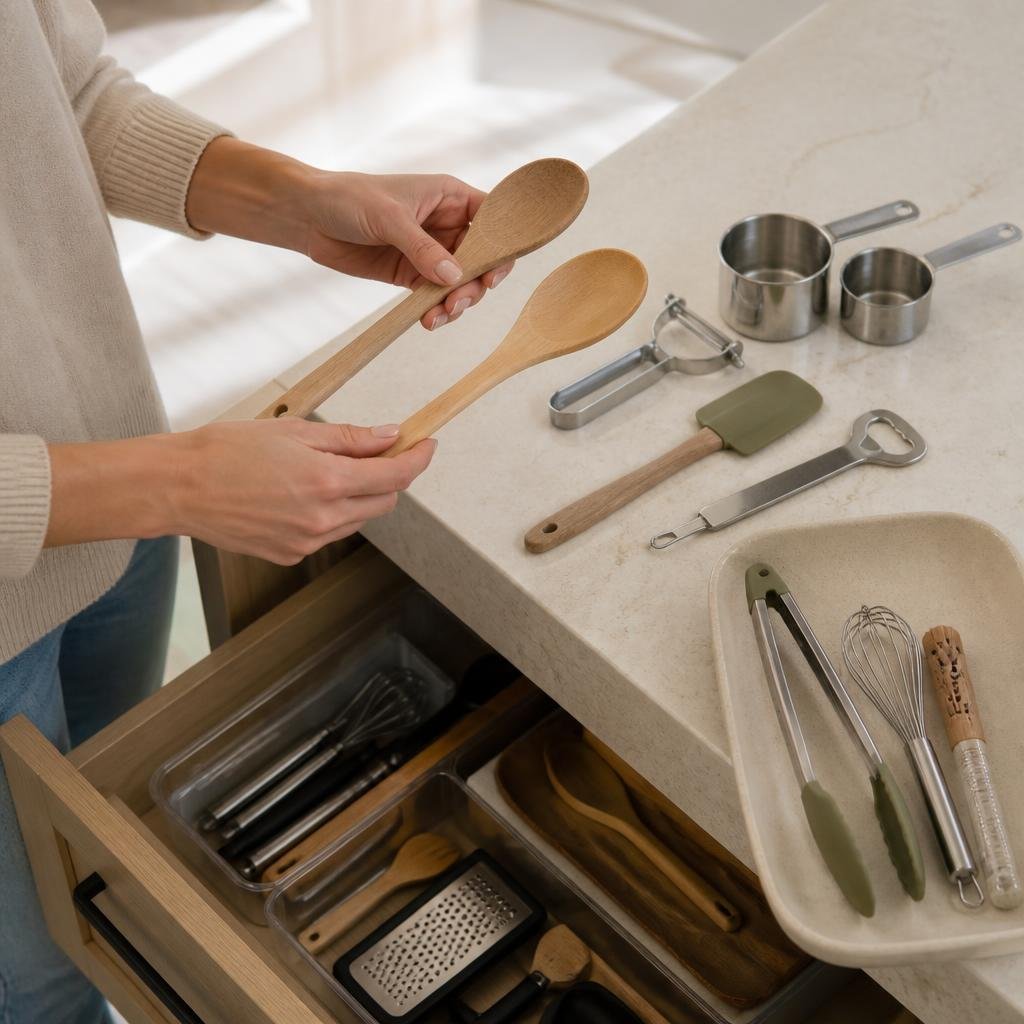
☐ Duplicate utensils
☐ Broken kitchen tools
☐ Damaged gadgets you no longer use
☐ Excess measuring cups and spoons
☐ Duplicate peelers, openers, graters, or whisks
☐ Chipped mugs
☐ Cracked dishes
☐ Excess reusable bags
☐ Appliances you haven’t used in the past year
☐ Accessories for appliances you no longer own
☐ Instruction manuals you can easily access online
☐ Promotional cups and bottles you never choose
Countertops
Remove anything that doesn’t need permanent counter space.
Common candidates include:
☐ Appliances rarely used
☐ Excess utensil holders
☐ Random mail
☐ Receipts
☐ Empty containers
☐ Decorative items you no longer want
☐ Products that belong in another room
2. Bathroom Decluttering Checklist
Bathrooms collect small products quickly, which can make cabinets and drawers feel full even when the room itself looks tidy.
Medicine Cabinet and Health Products
Check for:
☐ Expired medications
☐ Expired first-aid products
☐ Empty packages
☐ Old prescription containers
☐ Products you no longer use
Dispose of medications according to local medication-disposal guidance rather than automatically placing them in household trash or flushing them.
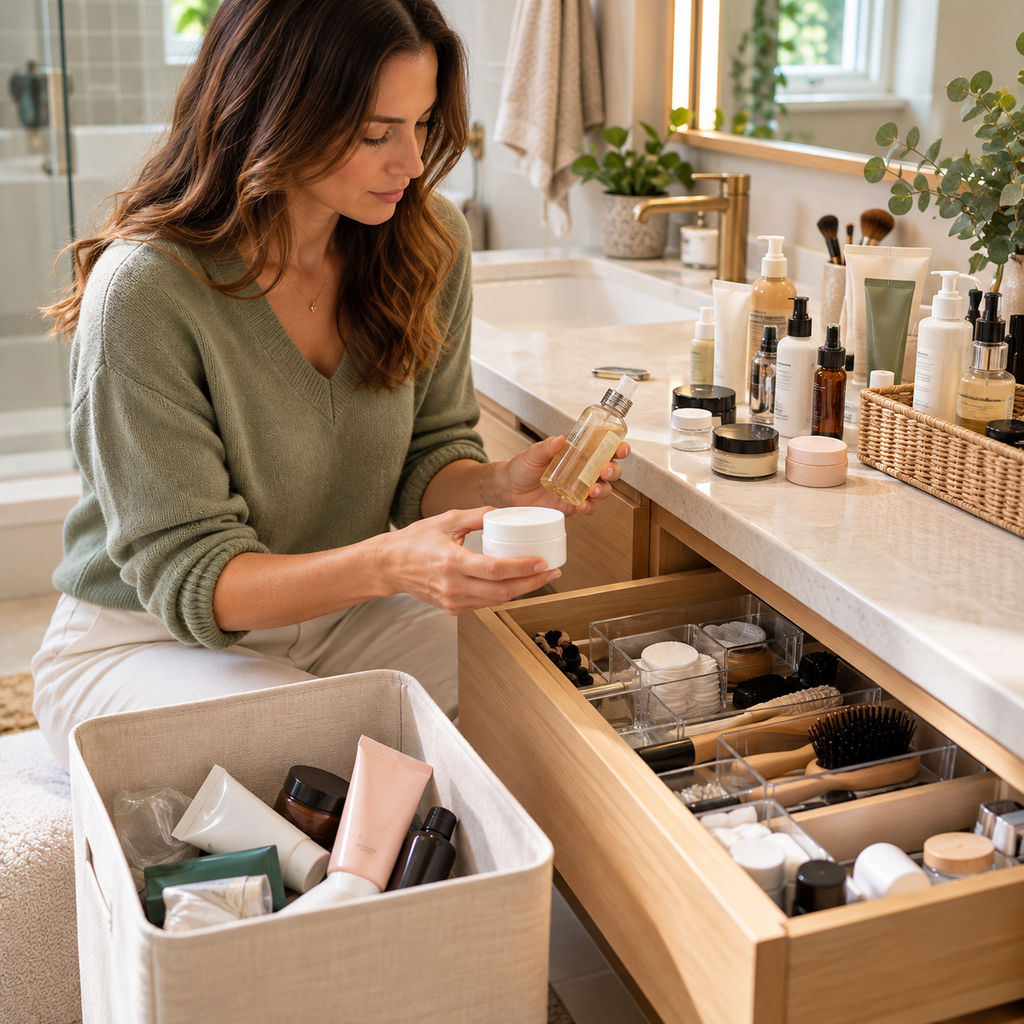
Skincare and Beauty
Remove:
☐ Products past their expiration date or recommended use period
☐ Products with an unusual change in smell, color, or texture
☐ Empty bottles and jars
☐ Samples you’ll realistically never use
☐ Products that irritated your skin
☐ Makeup you no longer use
☐ Dried-out makeup products
☐ Old makeup sponges
☐ Broken beauty tools
☐ Unnecessary duplicates
For products without a printed expiration date, check the packaging for manufacturer guidance, including any period-after-opening information where provided.
Hair Care
Check:
☐ Nearly empty bottles you keep avoiding
☐ Products that don’t work for your hair
☐ Broken combs
☐ Damaged brushes
☐ Excess hair ties
☐ Stretched-out hair bands
☐ Broken clips
☐ Styling tools you no longer use
☐ Attachments for tools you no longer own
Towels and Linens
Remove or repurpose:
☐ Torn towels
☐ Severely stained towels
☐ Worn washcloths
☐ Excess towels your household never uses
☐ Old bath mats that need replacing
Old towels that are no longer suitable for regular use can often become cleaning cloths.
Under the Sink
Look for:
☐ Empty cleaning bottles
☐ Duplicate cleaners you don’t need
☐ Old toiletries
☐ Unused travel-size products
☐ Hotel toiletries you never use
☐ Products you forgot you owned
3. Bedroom Decluttering Checklist
Keep the bedroom checklist focused on what actually belongs in the room.
Start with visible surfaces before opening storage.
Nightstand
Remove:
☐ Old receipts
☐ Empty glasses or bottles
☐ Random chargers
☐ Pens that no longer work
☐ Used tissues or empty tissue packages
☐ Finished books you don’t plan to reread or keep
☐ Empty medication packaging
☐ Products that belong in the bathroom
☐ Jewelry that belongs somewhere else
Dresser
Check:
☐ Clothes that don’t belong there
☐ Empty packaging
☐ Broken accessories
☐ Decorative objects you no longer want
☐ Old paperwork
☐ Random coins and receipts
☐ Products that have migrated from other rooms
Under the Bed
Look for:
☐ Empty boxes
☐ Forgotten shopping bags
☐ Clothes
☐ Shoes you don’t wear
☐ Broken storage containers
☐ Items you forgot were there
If something has been under the bed long enough for you to forget it existed, decide whether it still deserves the storage space before putting it back.
4. Closet Decluttering Checklist
For clothes, start with the obvious candidates instead of turning every item into a complicated decision.
Clothing
Check for:
☐ Clothes that no longer fit
☐ Clothes you consistently avoid wearing
☐ Uncomfortable clothing
☐ Permanently stained pieces
☐ Items with damage you realistically won’t repair
☐ Duplicate basics beyond what you actually use
☐ Clothes that no longer suit your current lifestyle
☐ Special-event clothing you know you won’t wear again
☐ Old sleepwear you never choose
☐ Worn-out underwear
☐ Socks with holes
☐ Single socks whose partners are long gone
Shoes
Remove:
☐ Shoes that hurt every time you wear them
☐ Damaged shoes you won’t repair
☐ Shoes that no longer fit
☐ Pairs you haven’t worn in years
☐ Duplicate styles you consistently pass over
Bags and Accessories
Check:
☐ Broken bags
☐ Bags you never use
☐ Damaged belts
☐ Belts you never wear
☐ Scarves you don’t use
☐ Broken jewelry
☐ Costume jewelry you no longer like
☐ Empty jewelry boxes
☐ Old wallets
☐ Excess tote bags

5. Living Room Decluttering Checklist
Living rooms often become collection points for things that actually belong somewhere else.
Start by removing those first.
Surfaces
Check coffee tables, side tables, shelves, and consoles for:
☐ Old mail
☐ Receipts
☐ Magazines
☐ Catalogs
☐ Empty packaging
☐ Random chargers
☐ Cups and dishes
☐ Toys that belong elsewhere
☐ Products from other rooms
☐ Decorative objects you no longer like
Entertainment Items
Remove:
☐ Broken remote controls
☐ Remotes for devices you no longer own
☐ Old cables
☐ Duplicate charging cables
☐ Unused DVDs or games
☐ Broken headphones
☐ Dead batteries waiting for appropriate disposal
☐ Old electronics you no longer use
Books and Media
Check:
☐ Books you don’t plan to read again
☐ Books you started but don’t want to finish
☐ Outdated reference books
☐ Old magazines
☐ Duplicate books
☐ Manuals you no longer need
Decor
Look at each decorative object individually.
Remove:
☐ Decor you no longer like
☐ Broken frames
☐ Empty frames you won’t use
☐ Artificial plants in poor condition
☐ Decorative storage boxes serving no useful purpose
☐ Seasonal decor you haven’t displayed in years
6. Home Office Decluttering Checklist
Paper and small technology accessories are usually the biggest clutter sources here.
Paper
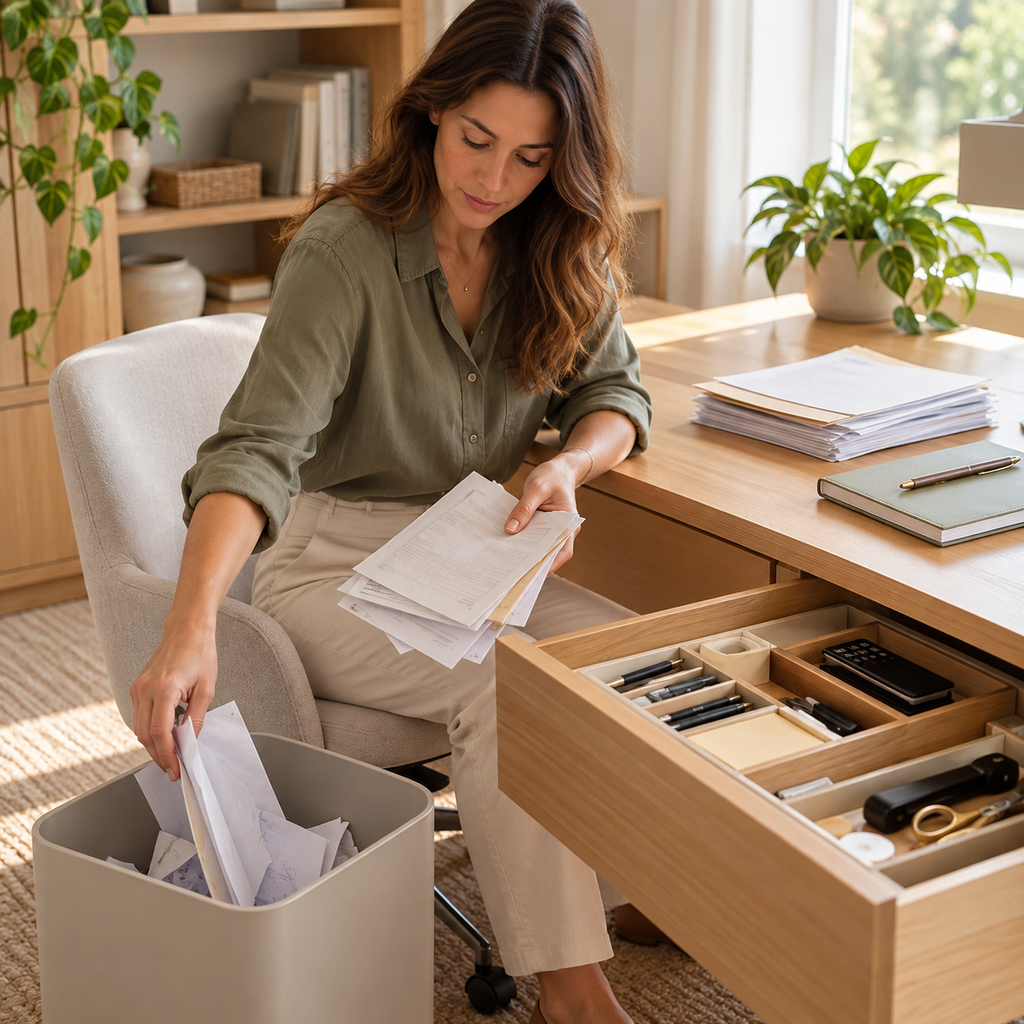
Sort:
☐ Junk mail
☐ Receipts you no longer need
☐ Expired coupons
☐ Outdated notes
☐ Duplicate printed documents
☐ Old drafts you no longer need
☐ Empty envelopes
☐ Unnecessary packaging
☐ Manuals easily available online
☐ Old notebooks containing nothing you need
Keep documents that need to be retained for legal, financial, tax, medical, warranty, or other recordkeeping purposes according to the requirements that apply to you.
Don’t discard important records simply because they’re old.
Desk Supplies
Check:
☐ Pens that don’t work
☐ Dried-out markers
☐ Broken pencils
☐ Empty tape dispensers
☐ Duplicate scissors
☐ Excess notebooks
☐ Old sticky notes
☐ Broken staplers
☐ Supplies you haven’t used in years
Technology
Look for:
☐ Unidentified cables you can confirm you no longer need
☐ Chargers for devices you no longer own
☐ Broken keyboards or mice
☐ Old phone cases
☐ Electronics boxes you have no reason to retain
☐ Outdated accessories
☐ Dead electronics
Before donating, recycling, or disposing of electronics, remove personal data where applicable and use an appropriate electronics recycling or disposal option.
7. Laundry Room Decluttering Checklist
Laundry areas can easily become storage zones for products nobody actually uses.
Check:
☐ Empty detergent containers
☐ Nearly empty products you dislike and won’t finish
☐ Duplicate stain removers you don’t need
☐ Cleaning products you no longer use
☐ Broken clothespins
☐ Empty spray bottles
☐ Worn cleaning cloths
☐ Damaged laundry baskets
☐ Single socks
☐ Items waiting for repairs you realistically won’t make
☐ Empty product boxes
☐ Unused ironing accessories
Keep household chemicals in their original containers and follow the storage and disposal instructions provided for those products.
8. Entryway Decluttering Checklist
The entryway works best when it contains things you actually need while entering or leaving the house.
Remove:
☐ Junk mail
☐ Old receipts
☐ Empty shopping bags
☐ Shoes nobody currently wears
☐ Broken umbrellas
☐ Excess reusable bags
☐ Old or broken sunglasses
☐ Random coins
☐ Expired coupons
☐ Keys you have confirmed you no longer need
☐ Jackets that belong in a closet
☐ Items waiting to be carried somewhere else
Give frequently used essentials a defined place.
Keys, current bags, everyday shoes, and outgoing items are easier to manage when they have one predictable location.
Don’t Forget These Easy-to-Miss Decluttering Spots
Once you’ve worked through the main rooms, check the places clutter likes to hide.
Junk Drawer
Remove:
☐ Dead batteries for appropriate disposal
☐ Broken pens
☐ Keys you have confirmed you no longer need
☐ Old receipts
☐ Takeout menus available online
☐ Random hardware you no longer need
☐ Dried-out glue
☐ Expired coupons
☐ Duplicate small tools
Linen Closet
Check:
☐ Worn sheets
☐ Sheets for bed sizes you no longer own
☐ Pillowcases you never use
☐ Old blankets you don’t need
☐ Excess towels
☐ Damaged linens
Cleaning Supplies
Remove:
☐ Empty bottles
☐ Broken cleaning tools
☐ Duplicate products you don’t use
☐ Old sponges
☐ Worn brushes
☐ Cleaning gadgets that didn’t work for you
Bags, Baskets, and Storage Containers
Storage products can become clutter too.
Check:
☐ Empty boxes saved without a specific purpose
☐ Excess baskets
☐ Storage bins with no current use
☐ Broken organizers
☐ Shopping bags you don’t need
☐ Excess gift bags
50 Things You Can Declutter Right Now
Need a faster reference?
Walk through your home and look specifically for these 50 common clutter items:
- Expired food
- Stale snacks
- Old leftovers
- Expired condiments
- Food-storage containers or lids without a matching piece
- Chipped mugs
- Cracked dishes
- Duplicate kitchen utensils
- Kitchen gadgets you never use
- Excess takeout containers
- Empty beauty products
- Beauty samples you’ll never use
- Products past their expiration or recommended use period
- Broken hair accessories
- Old makeup sponges
- Worn washcloths
- Torn towels
- Hotel toiletries you never use
- Clothes that no longer fit
- Clothes you consistently avoid wearing
- Permanently stained clothes
- Socks with holes
- Single socks
- Shoes that consistently hurt
- Broken bags
- Old wallets you no longer use
- Excess tote bags
- Broken jewelry
- Junk mail
- Old catalogs
- Receipts you no longer need
- Expired coupons
- Pens that don’t work
- Dried-out markers
- Old notebooks you no longer need
- Chargers for devices you no longer own
- Cables you have confirmed you no longer need
- Broken headphones
- Old phone cases
- Remotes for devices you no longer own
- Magazines you won’t reread
- Books you no longer want
- Empty product boxes you don’t need
- Broken umbrellas
- Excess reusable shopping bags
- Damaged storage bins
- Worn cleaning cloths
- Empty cleaning-product containers
- Decorative objects you no longer like
- Unused organizers, baskets, or storage products with no current purpose
Room-by-Room Decluttering Checklist at a Glance
Use this order as you work through the house:
1. Kitchen
Food → refrigerator → food storage → drawers → cabinets → countertops
2. Bathroom
Medicine cabinet → beauty → hair care → towels → under sink
3. Bedroom
Nightstand → dresser → under bed
4. Closet
Clothes → shoes → bags → accessories
5. Living Room
Surfaces → electronics → books → decor
6. Home Office
Paper → supplies → technology
7. Laundry Room
Laundry products → cleaning products → baskets → miscellaneous items
8. Entryway
Mail → bags → shoes → keys → outgoing items
Then finish with:
Junk drawer → linen closet → cleaning supplies → storage containers.
Finish Each Room Before Moving On
Once you’ve completed a room:
KEEP → Return it to where it belongs.
DONATE → Move the donation bag or box toward your designated drop-off area.
RECYCLE → Separate items according to your local recycling requirements.
TRASH → Remove the trash from the room.
RELOCATE → Return misplaced items to their correct rooms.
Then move to the next space.
This checklist isn’t about creating a perfectly styled home.
It’s a reference for one much more practical job:
Identify what no longer needs to be there, remove it, and keep what remains easier to see and use.