
Skincare routine for oily skin doesn’t have to mean washing your face constantly, skipping moisturizer, or layering every oil-control product you can find.
In fact, trying too hard to make oily skin feel completely dry can leave it irritated and make your routine much harder to manage.
A better approach is surprisingly simple: cleanse gently, use targeted products only when you need them, keep your skin hydrated, and protect it from the sun.
Below is a practical morning and night routine for oily skin, including what order to apply your products, which steps are actually necessary, and what you can skip.
First: What Does Oily Skin Actually Need?
Oily skin produces more sebum, or natural skin oil, than you may want. You might notice:
- shine returning quickly after cleansing;
- an especially oily forehead, nose, and chin;
- makeup separating or sliding during the day;
- pores that appear more noticeable;
- blackheads or clogged pores;
- frequent breakouts.
But oily skin is not the same thing as dirty skin — and oil is not something you need to scrub away aggressively.
The goal of your routine is not to make your face feel completely dry.
Instead, you want a routine that removes excess oil and buildup without unnecessarily irritating your skin.
That means you probably need fewer products than social media would have you believe.
If you’re still learning the basics of skincare and what each product does, start with How to Build a Skincare Routine for Beginners before adding extra treatments.
Morning Skincare Routine for Oily Skin
Your morning routine can be very simple:
Cleanser → Optional Treatment → Moisturizer → Sunscreen
You do not need seven serums between those steps.
Step 1: Cleanse Gently
Start your morning by washing your face with a gentle facial cleanser and lukewarm water.
If your skin is oily or prone to clogged pores, you may prefer a lightweight gel or foaming cleanser. Look for products labeled:
- oil-free;
- non-comedogenic;
- won’t clog pores.
Avoid scrubbing your face with washcloths, cleansing brushes, or gritty facial scrubs just because your skin feels greasy.
Your skin should feel clean after washing — not tight, rough, or squeaky.
If your face regularly feels uncomfortable after cleansing, your cleanser may be too harsh or you may be cleansing too aggressively.
For the complete morning product order, see Morning Skincare Routine: The Correct Order to Apply Your Products.
Step 2: Add a Treatment Only If You Actually Need One
This is where oily-skin routines often become unnecessarily complicated.
You do not automatically need toner, essence, exfoliating toner, three serums, spot treatment, and an oil-control primer every morning.
Start with the concern you are actually trying to address.
For example, salicylic acid is commonly used in products designed for oily and acne-prone skin because it can help unclog pores.
But that does not mean you need salicylic acid in your cleanser, toner, serum, and spot treatment at the same time.
More treatment is not automatically better treatment.
If you introduce an active product, add one change at a time. That makes it much easier to notice whether your skin tolerates it.
Step 3: Use a Lightweight Moisturizer
Yes — oily skin can still need moisturizer.
Skipping it simply because your face produces oil confuses two different things: oil and hydration are not the same thing.
Choose a moisturizer that feels comfortable on your skin. Lightweight lotions and gels may feel more pleasant than rich creams if you become shiny easily.
Useful label terms include:
- oil-free;
- non-comedogenic;
- won’t clog pores.
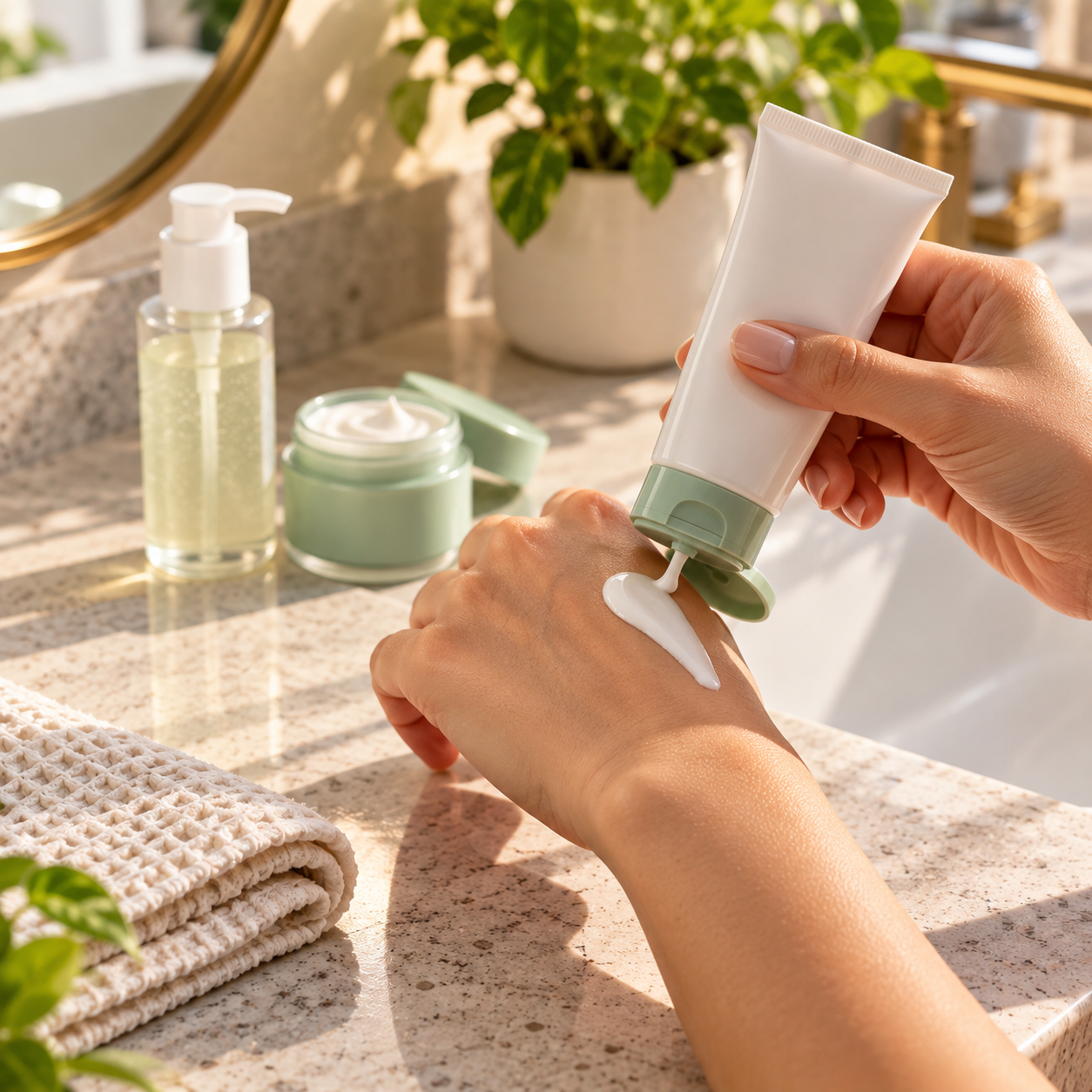
You also don’t need a thick visible layer.
Apply enough to cover your skin comfortably and let it settle before moving to sunscreen.
Step 4: Finish With Sunscreen
Sunscreen is the last skincare step in your morning routine.
Look for a broad-spectrum SPF 30 or higher. If traditional sunscreen feels heavy or greasy, experiment with formulas designed for oily or acne-prone skin rather than skipping sunscreen altogether.
Gel, fluid, lightweight and matte-finish formulas may feel more comfortable, although the best sunscreen is ultimately one you will consistently wear.
Your basic morning routine is now finished:
Cleanse → Treat if needed → Moisturize → Sunscreen
Simple.
How Much Product Does Oily Skin Need?
One of the easiest ways to turn a reasonable skincare routine into a greasy one is simply using too much product.
More moisturizer doesn’t necessarily mean more hydration. More serum doesn’t necessarily mean faster results.
And applying several products designed to control oil at once can leave your skin irritated.
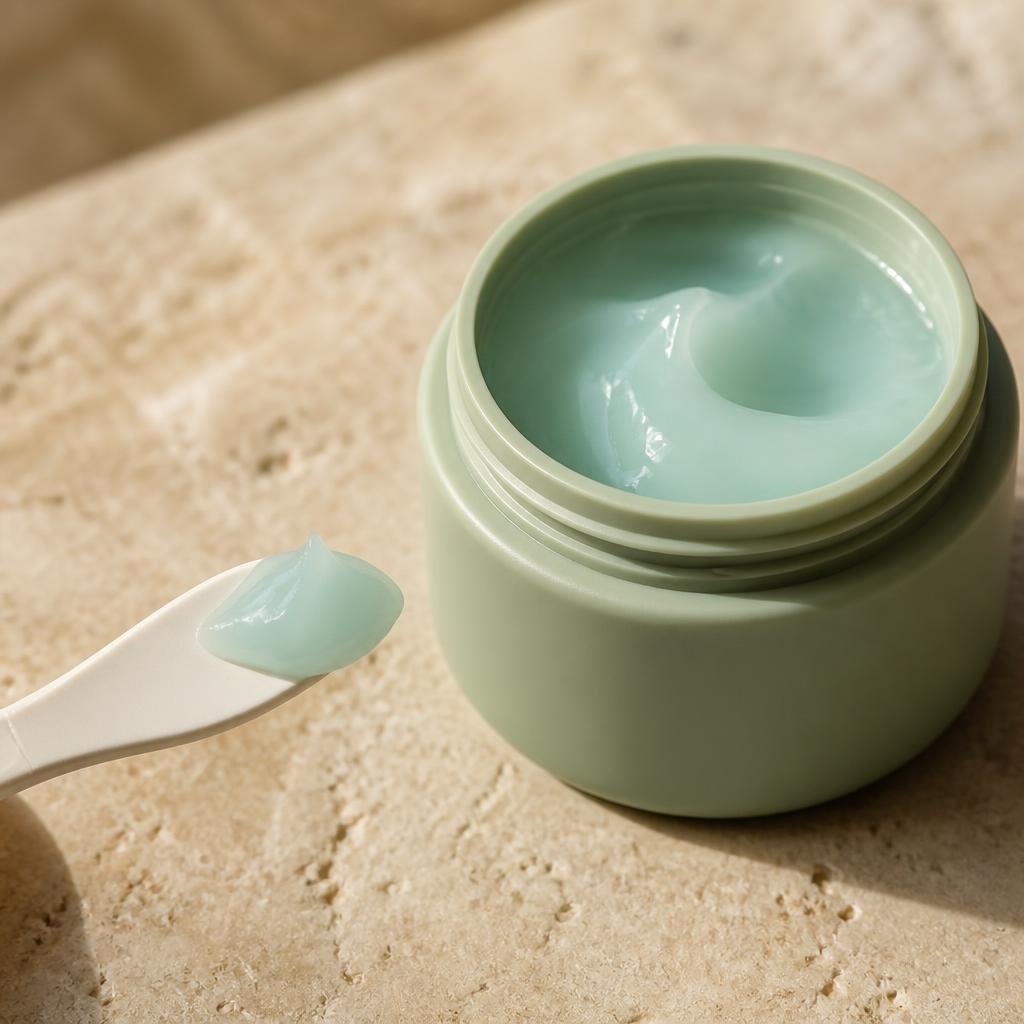
Start with a modest amount and spread it evenly.
Your skincare should form comfortable layers. It shouldn’t feel like you have built a seven-story apartment complex on your face by breakfast.
If your morning routine consistently pills, feels sticky, or leaves you excessively shiny before you’ve even left the house, review how many products — and how much of each — you’re applying.
What to Do When Your Face Gets Oily During the Day
You completed your morning routine perfectly.
It is 2:17 p.m.
Your forehead has other plans.
That doesn’t mean your skincare routine failed.
Oil production continues throughout the day, and some people naturally become shinier faster than others.
Resist the temptation to repeatedly wash your face every time oil appears.
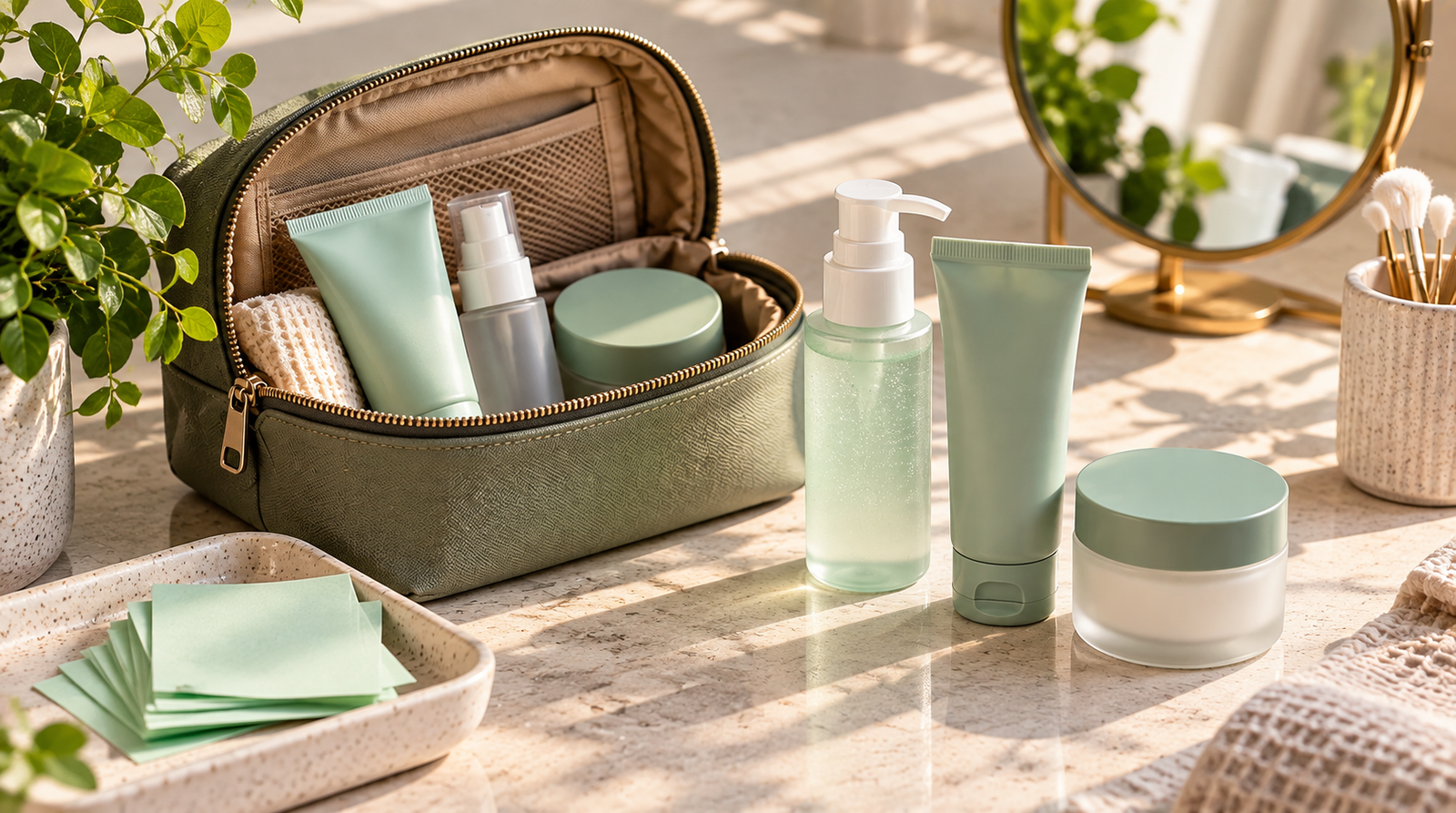
Instead, blotting papers can remove some surface oil without turning midday into a second full skincare routine.

Gently press the paper against shiny areas rather than aggressively rubbing your skin.
And remember: visible oil does not automatically mean your face needs another round of cleanser.
If you exercise or sweat heavily, washing afterward can make sense. But repeatedly cleansing throughout an ordinary day can irritate your skin.
Night Skincare Routine for Oily Skin
At night, your goal changes.
You need to remove sunscreen, makeup if you wear it, excess oil, sweat, and the buildup your skin collected during the day.
Your basic nighttime routine is:
Remove makeup/sunscreen if necessary → Cleanse → Treatment if needed → Moisturize
Notice what’s missing?
Sunscreen.
Save that for tomorrow morning.
Step 1: Remove Makeup and Sunscreen
If you’re wearing makeup, remove it before going to bed.
Depending on what you wear and how easily it comes off, you may use an appropriate makeup remover or first cleanse before following with your regular facial cleanser.
You do not have to automatically double cleanse every night simply because you have oily skin.
The purpose is to get your skin clean — not to win an Olympic medal in cleansing.
Step 2: Cleanse
Wash your face gently with your regular cleanser.
Again, oily skin doesn’t require aggressive scrubbing.
Use your fingertips, lukewarm water, and a cleanser appropriate for your skin.
If your cleanser contains an active ingredient such as salicylic acid and your skin becomes dry, tight, flaky, or irritated, consider whether you’re using it too frequently or combining it with too many other active products.
Step 3: Use Your Night Treatment — If You Have One
Treatment is optional.
What belongs here depends on what you’re trying to address.
Someone dealing mainly with occasional shine may not need the same routine as someone dealing with persistent acne.
This is also why copying someone else’s ten-product nighttime routine isn’t particularly useful.
If you’re using an acne medication or another treatment recommended by a dermatologist, follow those directions rather than adding random trending actives around it.
And avoid introducing several strong products simultaneously. If irritation develops, you won’t know which one caused it.
For a complete explanation of nighttime layering, read Night Skincare Routine Order: The Correct Steps Before Bed.
Step 4: Moisturize
Finish with moisturizer.
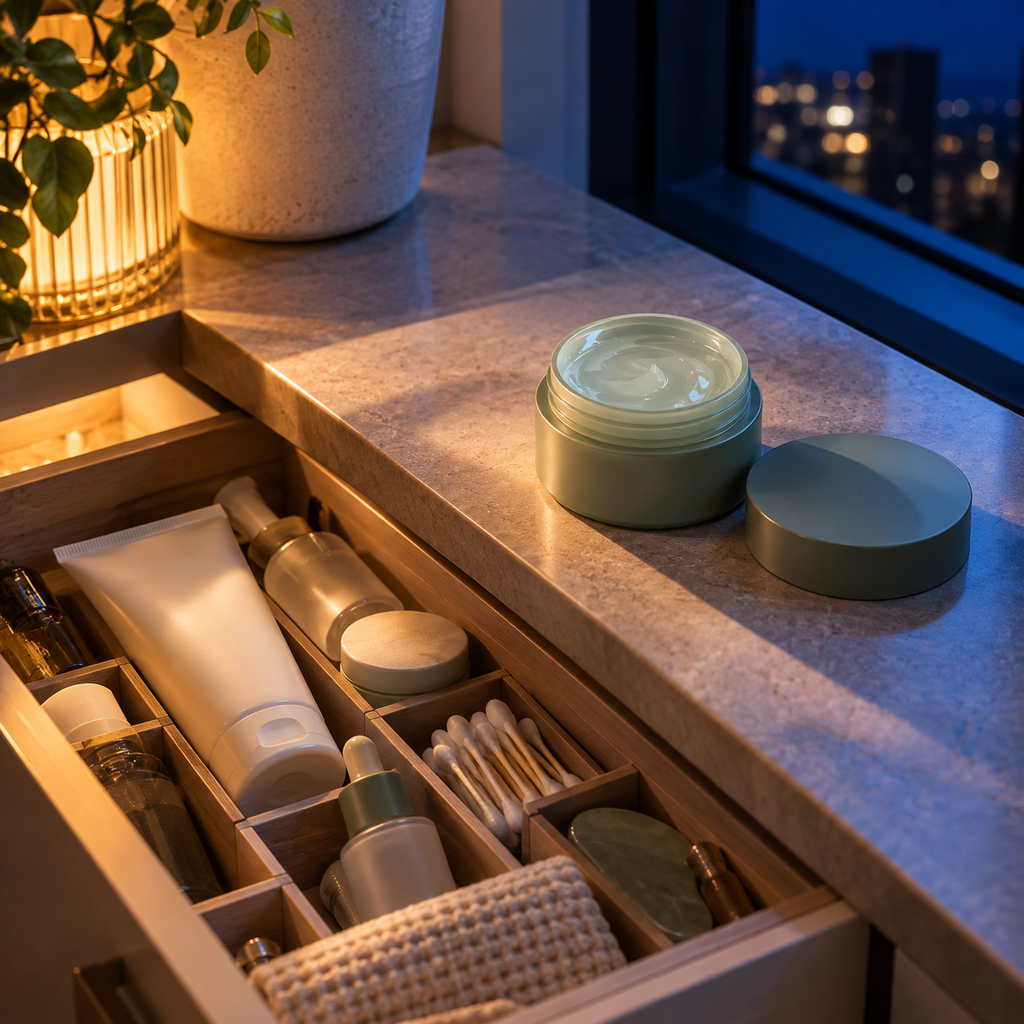
If you dislike heavy creams, choose a lightweight, non-comedogenic formula that feels comfortable.
Moisturizer can be especially useful when you’re using ingredients that can leave skin dry or irritated.
Your night routine is complete:
Remove makeup/sunscreen if necessary → Cleanse → Treatment if needed → Moisturize
You do not need to wake up looking glazed like a doughnut for your skincare to be working.
Morning vs. Night Routine for Oily Skin
Here is the entire routine side by side:
| Morning | Night |
|---|---|
| Gentle cleanser | Remove makeup/sunscreen if necessary |
| Optional treatment | Gentle cleanser |
| Lightweight moisturizer | Optional treatment |
| Broad-spectrum SPF 30+ | Lightweight moisturizer |
The biggest difference is simple:
Sunscreen belongs in the morning. Cleansing away the day’s buildup and using appropriate treatments belong at night.
Everything else should earn its place in your routine.
Ingredients to Look for in Oily-Skin Products
You don’t need to hunt for every ingredient on this list.
Think of these as options based on what your skin needs.
Salicylic Acid
Salicylic acid is commonly found in cleansers and treatments for oily or acne-prone skin and can help unclog pores.
If you use it, pay attention to your skin’s response.
Dryness and irritation are signs that you may need to reduce frequency or simplify other parts of your routine.
Niacinamide
Niacinamide appears in many lightweight serums and moisturizers marketed toward oily skin.
You don’t necessarily need a separate niacinamide serum if it’s already included in another product you like.
Again: don’t collect ingredients just to collect ingredients.
Lightweight Hydrating Ingredients
Ingredients such as glycerin and hyaluronic acid are commonly used in moisturizers and hydrating products.
Having oily skin doesn’t mean every hydrating ingredient should be banished from your bathroom.
Non-Comedogenic Formulas
When choosing moisturizers, sunscreen, makeup, and other leave-on products, look for terms such as non-comedogenic, oil-free, or won’t clog pores, particularly if you are prone to breakouts.
7 Common Oily-Skin Routine Mistakes
Sometimes improving your routine isn’t about adding something.
It’s about stopping something.
1. Washing Your Face Every Time It Looks Shiny
More washing isn’t necessarily better.
A reasonable starting point for many people is cleansing in the morning and before bed, plus after heavy sweating.
2. Trying to Make Your Skin Feel Squeaky Clean
That ultra-tight feeling after cleansing isn’t a prize.
Gentle cleansing is enough.
3. Skipping Moisturizer
Oiliness does not automatically eliminate the need for moisturizer, particularly if you’re using acne treatments or exfoliating ingredients that can dry or irritate your skin.
4. Using Several Oil-Control Products at Once
An acne cleanser plus exfoliating toner plus acid serum plus spot treatment plus drying mask can quickly become too much.
Choose products according to a specific purpose.
5. Scrubbing Away Oil
Physical scrubbing doesn’t switch off your sebaceous glands.
It can simply leave your skin irritated.
6. Changing Products Constantly
If you replace half your routine every few days, it becomes almost impossible to understand what is helping or irritating your skin.
Introduce products gradually.
7. Assuming More Products Mean Better Skin
This may be the biggest mistake of all.
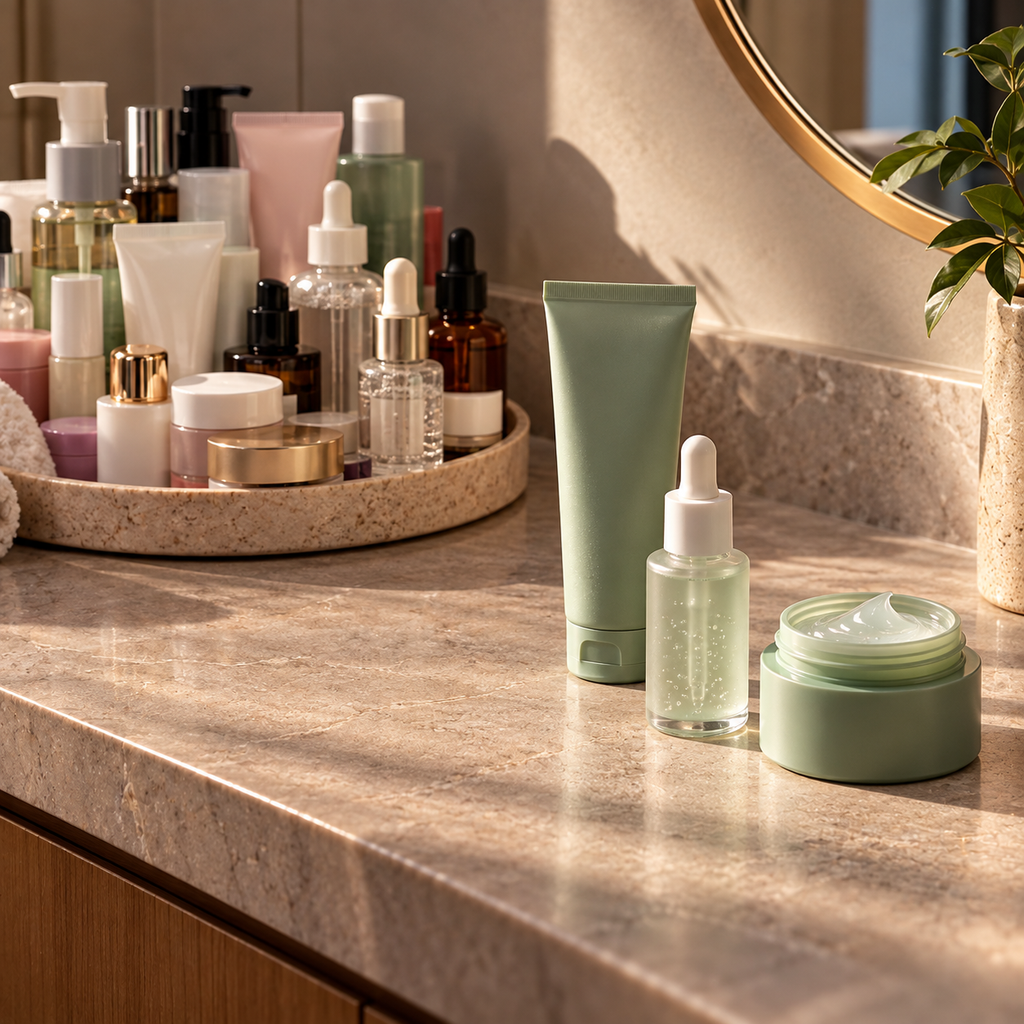
A cleanser, moisturizer and sunscreen already create a useful basic morning routine.
Add treatments because your skin needs them — not because an influencer had twelve products lined up next to the sink.
A Simple Oily-Skin Routine for Beginners
If everything above still feels like too much information, start here.
Morning
- Gentle cleanser
- Lightweight moisturizer
- Broad-spectrum SPF 30+
Night
- Remove makeup if necessary
- Gentle cleanser
- Lightweight moisturizer
Use that basic routine consistently first.
Then, if you have a specific concern such as clogged pores or acne, consider adding one appropriate treatment rather than rebuilding your entire routine.
That gives you a much better chance of figuring out what your skin actually likes.
What If Your Skin Is Oily but Also Feels Dry?
This is an important clue.
If your face looks oily but also feels tight, flaky, irritated, or uncomfortable, don’t automatically add another oil-control product.
Review your routine first.
Ask yourself:
- Am I cleansing too often?
- Is my cleanser too harsh?
- Am I using several exfoliating or acne products?
- Did I stop moisturizing because my skin is oily?
- Did the irritation begin after introducing a new product?
Simplifying your routine for a while may make it easier to identify the problem.
Persistent redness, burning, itching, painful acne, or significant irritation deserves professional evaluation rather than another round of skincare experimentation.
Your Oily-Skin Routine Doesn’t Need to Fight Your Skin
Managing oily skin isn’t about eliminating every trace of oil.
Your skin naturally produces sebum.
A useful routine simply keeps excess oil and buildup manageable while supporting your skin instead of constantly stripping it.
Remember the basic formula:
Morning: Cleanse → Treat if needed → Moisturize → Sunscreen
Night: Remove makeup/sunscreen if necessary → Cleanse → Treat if needed → Moisturize
Start simple. Pay attention to how your skin responds. Add products because they solve a specific problem.
Not because there is room for another bottle on the shelf.