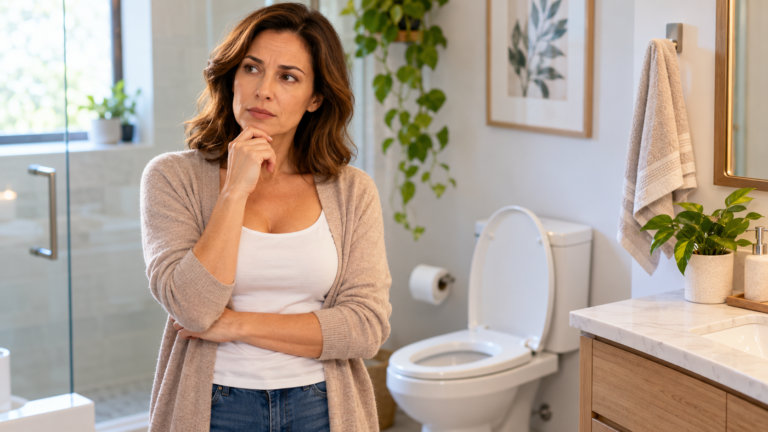


Wellness doesn’t have to mean completely changing the way you live.
You don’t need a perfect morning routine, an expensive collection of supplements, a complicated meal plan, or a schedule filled with healthy habits from the moment you wake up until you go to bed.
Often, feeling a little better in everyday life comes from much smaller things.
Getting up after sitting for too long. Eating before you become desperately hungry. Stepping outside for a few minutes. Giving your eyes a break from a screen. Making something you do every day slightly easier.
None of these habits will magically transform your life overnight.
That’s actually the point.
The most useful wellness habits are often the ones simple enough to become part of ordinary life.
Here are 12 realistic habits you can experiment with throughout your day — plus an easy way to choose which ones are actually worth starting.
1. Keep Water Where You Can See It
“Drink more water” is easy advice to give and surprisingly easy to forget.
Instead of relying on yourself to remember all day, make water visible and convenient.
Keep a bottle or glass near the place where you spend the most time. Bring one when you leave home. Refill it when you notice it is empty rather than waiting until much later.
The goal isn’t to obsess over a perfect number of glasses.
It’s simply to make drinking regularly easier.
Make It Easier
Attach refilling your water to something you already do.
For example:
- Refill it when you make lunch
- Bring it when you sit down to work
- Put it in your bag before leaving home
- Keep a reusable bottle in an obvious location
The less remembering required, the better the habit works.
2. Add Something Nourishing Instead of Constantly Taking Things Away
Healthy eating advice often begins with restriction.
Eat less of this.
Stop eating that.
Avoid this.
Never buy that.
A more practical approach for everyday life is to occasionally ask:
What could I add to this meal?
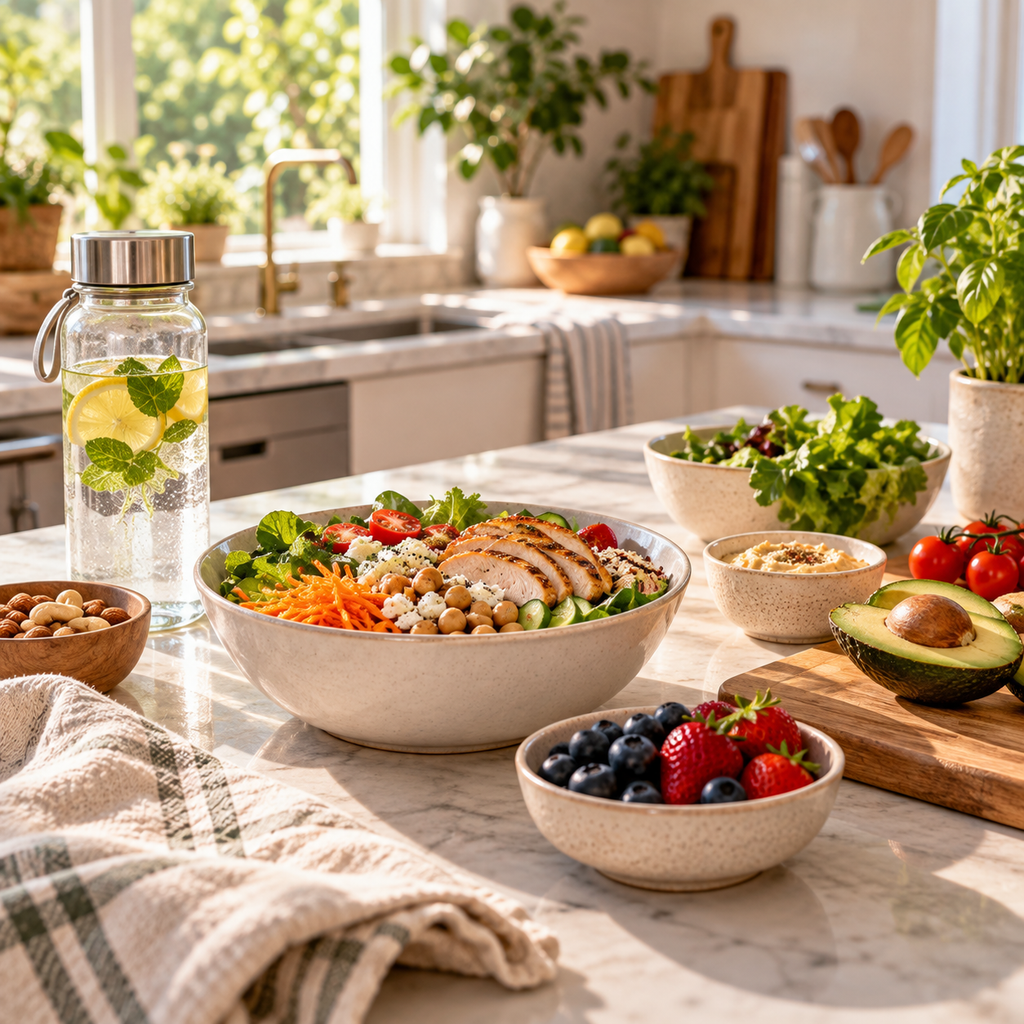
Maybe it’s fruit with breakfast, vegetables with lunch, beans in a soup, yogurt with a snack, or another source of protein in a meal that doesn’t contain much.
This approach doesn’t require turning every plate into a nutritional masterpiece.
It simply gives you another way to think about food besides restriction.
Make It Easier
Keep a few easy additions available rather than depending entirely on elaborate meal preparation.
Choose options that fit your preferences, budget, dietary needs, and any guidance you’ve received from a qualified healthcare professional.
3. Break Up Long Periods of Sitting
You don’t need to turn every break into a workout.
If you’ve been sitting for a long time, simply change position and move for a few minutes when you can.
You might:
- Walk to another room
- Refill your water
- Stand while taking a phone call
- Walk around while something heats up
- Stretch your legs
- Take a brief walk
- Do a small household task
The point is not to “earn” your next period of sitting.
It’s to stop remaining in exactly the same position for hours simply because you got absorbed in what you were doing.
Make It Easier
Use natural transitions instead of creating another complicated schedule.
Finished a meeting?
Get up.
Waiting for coffee?
Move around.
Completed a work block?
Change position before starting another one.
Tiny transitions are easier to repeat than ambitious plans.
4. Give Your Eyes Regular Screen Breaks
Sometimes the problem isn’t that you need to stop using technology.
You just need to stop staring continuously at the same screen.
During natural pauses, look away.
Look through a window. Stand up. Focus on something farther away. Close your eyes briefly. Do a task that doesn’t require another device.
And yes, switching from your laptop to your phone does not really count as escaping screens.
Nice try.
Make It Easier
Use moments that already exist:
- After finishing an email
- Between work blocks
- While waiting for something to load
- After a video call
- Before opening another app
A screen break doesn’t need to become a formal wellness ritual.
5. Take a Short Walk When It Fits Your Day
A walk doesn’t have to be long, intense, or worthy of tracking.
Sometimes ten minutes around the block is simply ten minutes around the block.
You can walk while:
- Taking a casual phone call
- Running a nearby errand
- Waiting for someone
- Taking a work break
- Getting some air after being indoors for hours
If walking isn’t appropriate or accessible for you, choose another comfortable form of movement that fits your abilities and circumstances.
Make It Easier
Don’t require special clothes, equipment, or a perfect route every time.
The more preparation a simple habit requires, the easier it becomes to skip.

6. Eat Before You Reach the “I Will Eat Anything” Stage
Busy days can make it easy to delay eating until you’re extremely hungry.
At that point, preparing something can feel like an unreasonable amount of work.
One practical habit is simply noticing when meals or snacks are repeatedly getting pushed too far into the day for you.
You don’t need rigid meal times.
But having accessible food options can make busy days easier.
Make It Easier
Keep a few low-effort foods you actually like available.
The specific foods will be different for everyone.
The important part is reducing the number of steps between “I need something to eat” and actually having something available.
7. Make One Frequently Used Space Easier to Live With
Your environment affects how much effort ordinary tasks require.
You don’t need to organize your entire home.
Pick one area you use constantly.
Maybe it’s:
- Your desk
- Kitchen counter
- Bathroom counter
- Entryway
- Bedside table
- The chair that somehow becomes a clothing department every three days
Remove what doesn’t need to be there and make the things you use frequently easier to reach.
This isn’t about creating an Instagram-perfect home.
It’s about reducing friction.
Make It Easier
Ask one question:
What annoys me about using this space every day?
Solve that problem first.
Maybe you need a basket.
Maybe something needs a permanent home.
Maybe you simply need to remove six things that don’t belong there.
Useful beats beautiful.
8. Create Small Pockets of Quiet
You don’t need an hour-long meditation practice to experience a few minutes without constant input.
Try allowing some ordinary moments to remain quiet.
No podcast.
No scrolling.
No video playing in the background.
No need to fill every spare second with information.
You might choose silence while:
- Making lunch
- Folding laundry
- Showering
- Walking somewhere
- Drinking something
- Waiting for an appointment
A few quiet minutes can simply be a break from consuming more content.
Make It Easier
Start with one activity that you occasionally do without additional media.
Not every activity.
Just one.

9. Reduce One Source of Unnecessary Digital Noise
You don’t have to delete every social media account or disappear into a cabin without Wi-Fi.
Instead, remove one source of digital interruption that adds very little value.
You could:
- Turn off notifications from one app
- Unsubscribe from promotional emails
- Leave an irrelevant group chat
- Remove an app you no longer use
- Unfollow accounts you consistently skip
- Move distracting apps away from your home screen
The goal isn’t digital purity.
It’s fewer unnecessary demands on your attention.
Make It Easier
Start with whatever irritates you most.
If you dismiss the same notification every single day without caring about it, that’s an excellent candidate.
10. Make Necessary Tasks Slightly More Pleasant
Not every wellness habit needs to be about adding another responsibility.
Sometimes it’s about improving something you already have to do.
You can make an ordinary task more pleasant by:
- Playing music while cleaning
- Using a mug you actually enjoy
- Opening a window while doing paperwork
- Taking your laptop somewhere more comfortable for an appropriate task
- Listening to something enjoyable during a routine chore
- Using a nice pen for your boring admin list
This isn’t about pretending chores are magical.
Laundry remains suspiciously committed to returning every week.
But making unavoidable tasks slightly nicer can reduce resistance.
Make It Easier
Choose something you already do frequently.
Don’t create a new activity just to make it pleasant.
Improve the experience of one that already exists.
11. Protect Small Gaps in Your Schedule
When every free ten minutes immediately gets filled, a normal day can start feeling like one continuous task.
Not every gap needs to become productive.
If you finish something earlier than expected, you don’t always need to squeeze in another chore.
If you have ten minutes before leaving, you don’t necessarily need to answer three emails.
Sometimes a gap can remain a gap.
Sit down.
Step outside.
Drink something.
Do absolutely nothing useful for five minutes.
Your schedule does not need 100% occupancy.
Make It Easier
Notice your tendency to immediately fill unexpected free time.
Then occasionally choose not to.
That’s the entire habit.
12. Do Small Tasks Before They Become Annoying Projects
Some everyday stress comes from tiny tasks multiplying.
One plate becomes a sink full of dishes.
One piece of mail becomes a stack.
One item on the chair becomes seventeen items and a handbag.
When something genuinely takes a minute or two and you’re already there, handling it can sometimes prevent a much more irritating job later.
Put the item back.
Throw away the packaging.
Add the appointment to your calendar.
Refill the thing you just finished.
This isn’t a rule that you must complete every tiny task immediately.
That would become exhausting.
Think of it as selectively preventing unnecessary buildup.
Make It Easier
Focus on the tiny tasks that repeatedly become bigger problems in your life.
Those are the ones worth catching early.
You Don’t Need to Start All 12
This is the most important part of the list.
Please do not finish reading 12 simple wellness habits and decide that your new assignment is to perform all 12 perfectly starting tomorrow.
That would defeat the entire point.
Instead, choose three.
Look back through the list and ask:
Which three would make my normal day noticeably easier?
Not which three sound healthiest.
Not which three look best on social media.
Not which three would be chosen by your imaginary most organized self.
Choose the ones that solve actual friction in your current life.
Choose Your Three: A Simple Wellness Experiment
Try this instead of making permanent promises.
Habit 1: Something for Your Body
Choose one habit that makes basic physical care easier.
For example:
- Keep water visible
- Add something nourishing to meals
- Break up long periods of sitting
- Take short walks when practical
- Keep easy food available
Habit 2: Something for Your Attention
Choose one habit that reduces unnecessary mental input.
For example:
- Take screen breaks
- Create small pockets of quiet
- Remove one source of digital noise
- Protect small gaps in your schedule
Habit 3: Something That Makes Daily Life Easier
Choose one habit that reduces everyday friction.
For example:
- Improve one frequently used space
- Make necessary tasks more pleasant
- Handle selected tiny tasks before they pile up
Now try those three for a while.
If one doesn’t fit your life, change it.
You haven’t failed a wellness program.
You discovered that a particular habit wasn’t useful for you.
That’s information.
Consistency Matters More Than an Ideal Routine
One of the easiest ways to make wellness feel exhausting is to turn it into another standard you can fail.
Real life changes.
Some days are busy.
Some weeks are chaotic.
Travel happens.
Deadlines happen.
Children, work, family responsibilities, unexpected problems, and low-energy days happen.
A useful habit should be able to survive imperfect conditions.
That might mean your usual walk becomes five minutes.
Your balanced lunch becomes the easiest reasonable option available.
Your quiet break lasts two minutes.
Your beautifully organized desk becomes slightly less beautifully organized.
That’s fine.
A smaller version of a useful habit can still be useful.
Build Habits Around Your Real Life
Before adopting any wellness habit, ask:
Where would this naturally fit into a day I already have?
That’s often more useful than asking:
What would my ideal routine look like?
If you already make lunch, that’s a natural moment to refill your water.
If you already finish several work blocks each day, that’s a natural cue to stand up.
If you already check your phone during every spare moment, one of those moments can occasionally become a quiet pause instead.
You don’t always need more motivation.
Sometimes you need a better place for the habit to live.
A Simple Rule to Remember
When you’re deciding whether a wellness habit deserves a place in your life, use this test:
Does this make everyday life easier to live, easier to maintain, or a little better to experience?
If yes, it may be worth keeping.
If maintaining the habit creates more stress than the problem it was supposed to solve, simplify it or choose something else.
Wellness should support your life.
Your life shouldn’t become a full-time project devoted to performing wellness correctly.
Start Small Enough That You Can Actually Start
You don’t need twelve new habits.
You don’t need a complete lifestyle reset.
And you definitely don’t need to wait for Monday.
Choose three small things that fit the life you’re already living.
Put water somewhere you’ll see it.
Take a short break from the screen.
Make one everyday task easier.
Then let those become ordinary before you decide whether you need anything else.
Because the best wellness habits aren’t necessarily the most impressive ones.
They’re the ones you can actually live with.