
Learning how to meditate for beginners is much simpler than it may seem. You don’t need to empty your mind, sit perfectly still for 30 minutes, master a complicated breathing technique, or create a peaceful meditation room.
You can start with just a few minutes.
At its simplest, meditation means choosing something to focus your attention on, noticing when your mind wanders, and gently bringing your attention back.
That’s the practice.
This step-by-step guide will show you exactly how to start meditating, what to focus on, how long to practice, what to do when your mind won’t stay quiet, and how to build a simple meditation habit that fits into real life.
Before You Start: What Do You Need to Meditate?
Very little.
For your first meditation, all you need is:
- 2–5 uninterrupted minutes
- a comfortable place to sit
- a timer
- one simple thing to focus on, such as your breathing
You don’t need a meditation cushion, candles, incense, special clothing, music, or an app.
Those things can be enjoyable, but none of them are necessary to learn the basic practice.
Start with what you already have.
What Is Meditation, Really?
Meditation is a practice of intentionally paying attention.
Throughout an ordinary day, your attention constantly moves between conversations, notifications, tasks, memories, plans, sounds, and worries.
During meditation, you deliberately give your attention somewhere to rest.
That might be:
- your breathing
- sounds around you
- physical sensations
- a word or phrase
- a guided meditation
- the feeling of your feet touching the floor
When your attention wanders—and it will—you notice what happened and return to your chosen focus.
That last part matters.
A wandering mind doesn’t mean you’re bad at meditation. Noticing that your attention wandered and bringing it back is part of the practice.
Meditation also doesn’t have to be religious or spiritual. Some people use it simply as a quiet attention practice, while others choose to include meditation in a broader spiritual routine.
If you’d like to explore that approach, read How to Start a Spiritual Self-Care Routine That Feels Meaningful.
How to Meditate for Beginners in 7 Simple Steps
You don’t need to wait until you feel calm enough, focused enough, or ready enough.
Here’s exactly how to begin.
Step 1: Choose a Realistic Amount of Time
Don’t begin by promising yourself you’ll meditate for 30 minutes every day.
Start smaller.
For your first few sessions, try:
2 minutes if sitting quietly feels unfamiliar.
5 minutes if you want enough time to settle into the practice.
10 minutes once shorter sessions begin to feel comfortable.
A short meditation you actually do is more useful than an ambitious routine you continually postpone.
Set a gentle timer so you don’t have to keep checking the clock.
Step 2: Find a Comfortable Place
You don’t need complete silence.
Choose somewhere you’re unlikely to be interrupted for the next few minutes.
That might be:
- a chair in your bedroom
- the end of your sofa
- a quiet corner of your home
- your desk before work begins
- a porch or balcony
- your parked car before going inside somewhere
You’re not trying to create the perfect meditation environment.
You’re simply making it easy enough to begin.
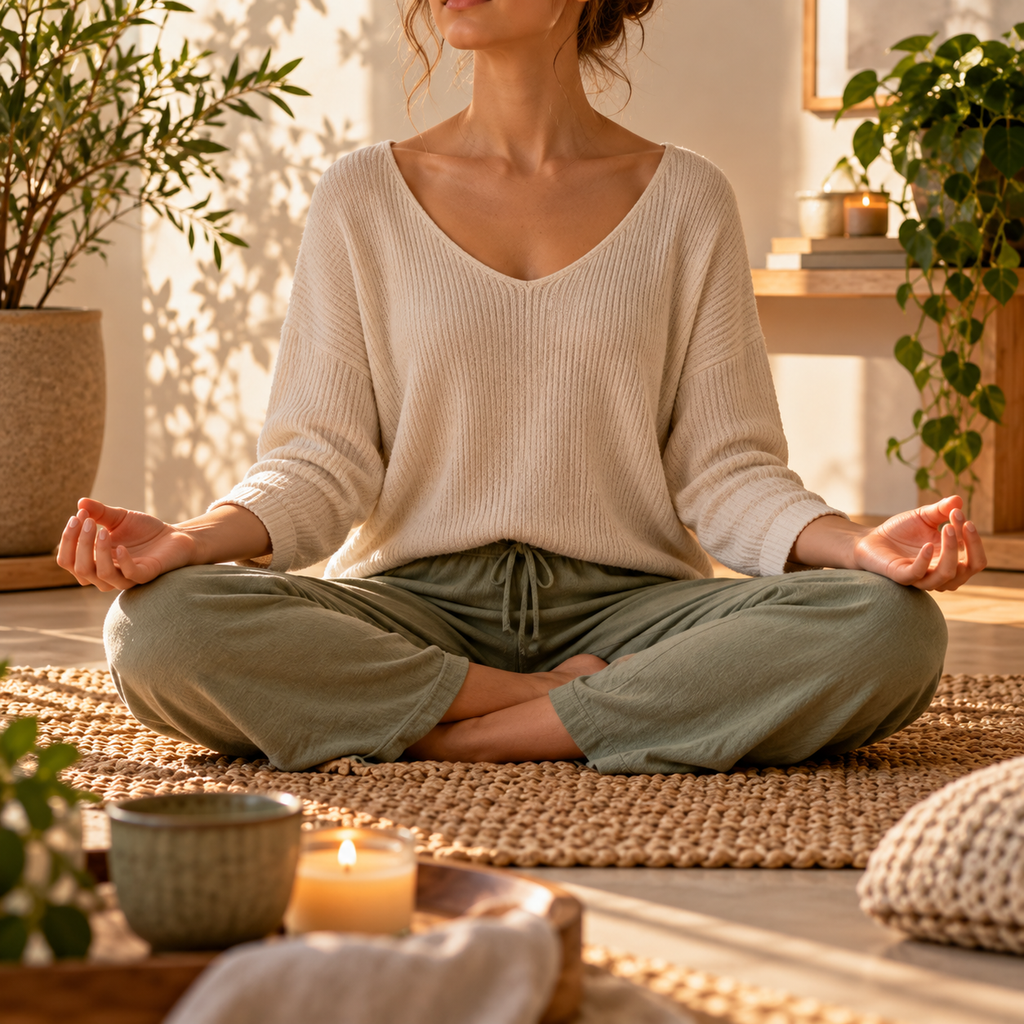
Step 3: Sit in a Comfortable Position
Forget the image of the perfectly cross-legged meditator.
You can meditate sitting in a regular chair.
Place both feet comfortably on the floor and allow your hands to rest naturally on your thighs or in your lap.
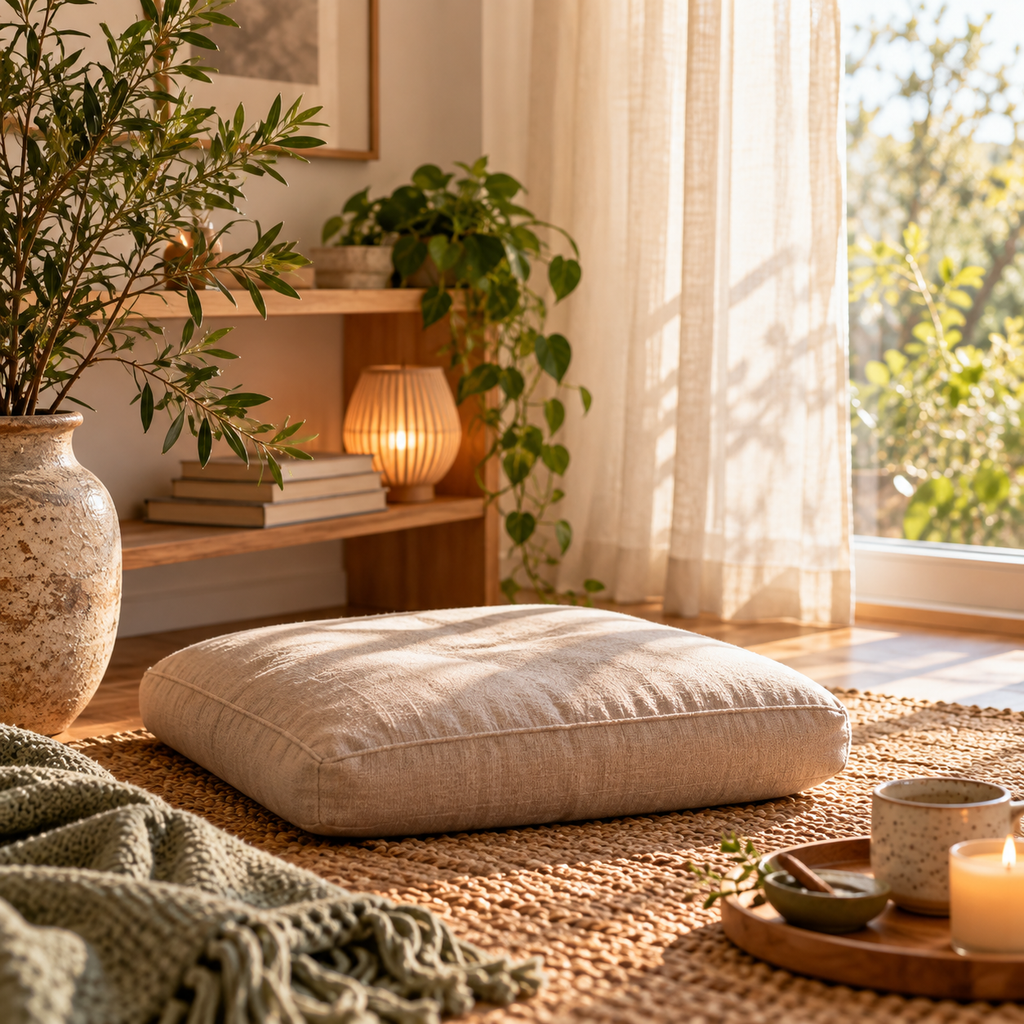
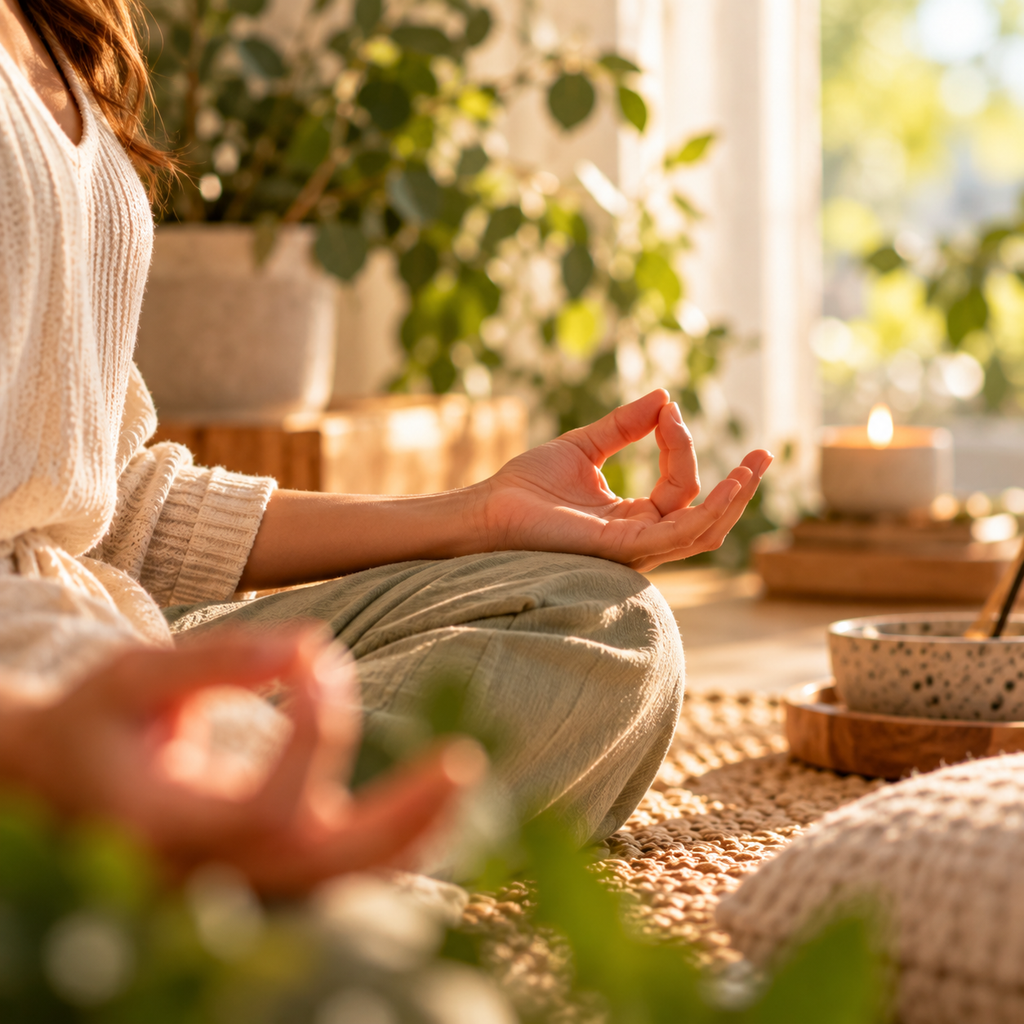
If you prefer sitting on the floor, use a cushion if it makes you more comfortable.
Keep your posture upright but relaxed.
Think:
awake, not rigid.
Your shoulders don’t need to be dramatically pulled back, and your hands don’t need to form any particular shape.
You can close your eyes or keep them slightly open with a soft gaze toward the floor.
Choose whichever option makes it easier for you to stay present.
Step 4: Choose One Thing to Focus On
For this beginner meditation, we’ll use the breath.
Let your breathing remain natural.
You don’t need to take enormous breaths or breathe according to a particular count.
Instead, notice what breathing actually feels like.
You might notice:
- air moving through your nose
- your chest gently rising and falling
- your abdomen moving
- the tiny pause between breaths
Choose one of those sensations as your anchor—the place you’ll return your attention to throughout the meditation.
If focusing on breathing feels uncomfortable, choose another neutral anchor instead.
You might listen to sounds around you or notice the sensation of your feet touching the floor.
The important part isn’t which anchor you choose.
It’s having somewhere simple to return your attention.
Step 5: Notice When Your Mind Wanders
Eventually, you’ll realize you’re no longer paying attention to your breath.
Instead, you’re thinking:
What am I making for dinner?
I need to answer that email.
Did I remember to pay that bill?
Why did I say that weird thing three years ago?
How long has this timer been running?
Welcome to meditation.
The goal isn’t to prevent thoughts from appearing.
When you notice that you’ve become caught in one, simply acknowledge what happened.
You can mentally say:
Thinking.
Then return your attention to your anchor.
You don’t have to analyze the thought, fight it, finish it, or criticize yourself for having it.
Notice.
Return.
Continue.

Step 6: Keep Coming Back
Your attention may wander again ten seconds later.
That’s okay.
Bring it back again.
During a five-minute meditation, you might redirect your attention five times or fifty times.
Neither number means you succeeded or failed.
There is no score.
There is no ideal number of thoughts.
There is no prize for having the quietest mind.
Each time you realize your attention has wandered, you have another opportunity to practice returning.
Step 7: End Slowly
When your timer goes off, don’t feel like you need to jump up immediately.
Take one normal breath.
Notice your body.
Notice the room around you.
If your eyes were closed, gently open them.
Then continue with your day.
That’s it.
You just meditated.
Try This: A 5-Minute Meditation for Beginners
If you understand the steps but still wonder what you’re actually supposed to do for five minutes, use this simple practice.
Minute 0–1: Settle In
Sit comfortably.
Notice the feeling of your body touching the chair, cushion, or floor.
Allow your shoulders and hands to relax.
Minute 1–2: Find Your Anchor
Bring your attention to your natural breathing.
Choose one sensation—the air at your nose, the movement of your chest, or the movement of your abdomen.
Minute 2–4: Practice Returning
Continue noticing your breath.
Your mind will probably wander.
When you notice it, return to your breathing.
Nothing else needs to happen.
Minute 4–5: Widen Your Attention
Continue noticing your breath while also becoming aware of your body and the sounds around you.
When the timer ends, take a moment before getting up.
You don’t need to feel dramatically different afterward.
The purpose of this first practice is simply to practice paying attention and returning.
What Should You Think About While Meditating?
You don’t need to choose something to think about.
For this beginner practice, your breath—or another simple sensory anchor—is enough.
Thoughts will still appear.
Instead of deliberately following every thought, practice noticing that your attention has moved away and gently returning it.
Imagine hearing a car pass outside.
You notice it.
But you don’t need to follow it down the street.
You can treat many thoughts the same way.
Notice.
Let them continue.
Return.
What If I Can’t Stop Thinking While Meditating?
Then you have a normal human mind.
One of the biggest misconceptions about meditation is that successful meditation means having no thoughts.
Trying to force yourself not to think can make the entire practice unnecessarily frustrating.
Instead of making your goal:
“I won’t think.”
Make it:
“I’ll notice when I’ve become distracted and come back.”
Some days your attention may feel relatively steady.
Other days your brain may seem determined to review your entire life, plan next Thursday, remember a random conversation, and mentally reorganize the kitchen—all within three minutes.
You can still practice on those days.
A busy session isn’t automatically a bad session.
Should You Meditate With Your Eyes Open or Closed?
Either is fine.
Closing your eyes may reduce visual distractions and make it easier to focus inward.
But some beginners become sleepy or simply feel more comfortable keeping their eyes open.
If that’s you, keep your eyes slightly open and rest your gaze softly on a neutral spot a few feet in front of you.
There’s no bonus point for keeping your eyes closed.
Choose what helps you practice comfortably.
When Is the Best Time to Meditate?
There isn’t one universally perfect time to meditate.
The best time is the one you can realistically repeat.
You might meditate:
- shortly after waking up
- after your morning coffee
- before beginning work
- during a lunch break
- after getting home
- before starting your evening routine
Morning meditation works well for many people because fewer things have had a chance to interrupt the day.
But you absolutely don’t need to become a 5 a.m. person to meditate.
If you’re already building a gentler start to your day, meditation can simply become one small part of your Simple Morning Wellness Routine for a Calmer Start rather than another elaborate routine to manage.
How Often Should Beginners Meditate?
Consistency matters more than creating an impressive schedule.
Instead of deciding:
“From now on, I’ll meditate every day forever.”
Try something much more specific:
“I’ll meditate for five minutes three times this week.”
That’s realistic and measurable.
Once that feels easy to maintain, decide whether you’d like to practice more often.
The same principle works when you’re trying to build other 12 Simple Wellness Habits That Make Everyday Life Feel Better start with something small enough to repeat before trying to make it bigger.
Common Meditation Mistakes Beginners Make
Trying to Empty Your Mind
You don’t need an empty mind.
Your job is to notice where your attention went and practice returning it.
Starting With Sessions That Are Too Long
If ten minutes feels endless, meditate for three.
There isn’t a magical minimum duration you need to reach before the practice “counts.”
Waiting for the Perfect Environment
Your home doesn’t need to resemble a wellness retreat.
Normal background noise is okay.
Perfect conditions aren’t required.
Forcing Your Breathing
Unless you’re intentionally practicing a specific breathing exercise, let your breath remain natural.
Meditation doesn’t require dramatic deep breathing.
Expecting Every Meditation to Feel Relaxing
Don’t judge the practice entirely by how you feel immediately afterward.
Some sessions may feel peaceful.
Others may make you more aware of restlessness, thoughts, sounds, or physical sensations that were already present.
You don’t have to manufacture a particular feeling for the session to count as practice.
Quitting Because Your Mind Keeps Wandering
This may be the most important mistake to avoid.
Your mind wandering isn’t the moment meditation stops working.
Noticing and returning is the exercise.
Do You Need a Meditation App?
No.
An app can be useful if you enjoy guided sessions, timers, reminders, or structured programs.
But it isn’t required to learn how to meditate.
For a basic independent practice, you need only:
- a timer
- somewhere comfortable to sit
- one simple anchor
- a few minutes
That’s enough to start.
Later, you can experiment with guided meditation and other styles to discover what works best for you.
A 7-Day Beginner Meditation Plan
Don’t worry about building a lifelong meditation habit yet.
Try one week first.
Day 1 — 2 Minutes
Sit comfortably and notice your breathing.
That’s all.
Day 2 — 3 Minutes
Pay attention to your breath and practice noticing when your attention wanders.
Return whenever you notice.
Day 3 — 5 Minutes
Repeat the same practice.
Don’t add anything new.
Day 4 — 5 Minutes
If your original meditation time has been inconvenient, experiment with a different time of day.
Day 5 — 5 Minutes
Experiment with your setup.
If you’ve been closing your eyes, try keeping them slightly open—or vice versa.
Day 6 — 7 Minutes
Add two minutes if five minutes has started to feel manageable.
If not, stay with five.
Day 7 — Your Choice
Choose 2, 5, 7, or 10 minutes.
Afterward, ask yourself:
When was meditation easiest to fit into my day?
Which position felt most comfortable?
Which anchor was easiest to return to?
What usually distracted me?
What would make this easier to repeat next week?
Use those answers to create a practice that fits your life instead of copying someone else’s routine.

Beginner Meditation Cheat Sheet
If everything above feels like too much information, save this simple version:
1. Sit somewhere comfortable.
2. Set a timer for 2–5 minutes.
3. Choose one simple anchor, such as your breath.
4. Let your breathing stay natural.
5. Notice when your mind wanders.
6. Bring your attention back.
7. Repeat until the timer ends.
That’s a meditation practice.
You can explore more techniques later.
First, learn to begin.
Frequently Asked Questions About Meditation for Beginners
How long should a beginner meditate?
Two to five minutes is a perfectly reasonable starting point. If that begins to feel comfortable, gradually experiment with longer sessions instead of forcing yourself to start with 20 or 30 minutes.
Is five minutes of meditation enough for a beginner?
Five minutes is enough to practice the basic process: choose an anchor, focus your attention, notice distraction, and return. You can increase the duration later if you enjoy longer sessions.
Can I meditate lying down?
You can, but lying down can make it easier to fall asleep. If staying awake becomes difficult, try sitting comfortably in a chair instead.
What is the easiest meditation for beginners?
A simple breath-awareness practice is an easy place to start because it requires no equipment or memorized script. Sit comfortably, notice your natural breathing, recognize when your attention wanders, and return.
What if focusing on my breathing feels uncomfortable?
You don’t have to use your breath as your anchor.
Try focusing on neutral sounds around you, the feeling of your feet touching the floor, or another comfortable physical sensation.
What if I feel uncomfortable during meditation?
You don’t need to force yourself through significant discomfort.
You can open your eyes, shorten the session, change your position, choose a different anchor, or stop.
Meditation isn’t something you have to endure to prove you’re doing it correctly.
Do I need to meditate every day?
No.
Some people enjoy practicing daily, but beginners can start with a few short sessions each week and see what fits naturally into their lives.
Start Smaller Than You Think You Need To
Learning how to meditate doesn’t require transforming your mornings, buying special equipment, or suddenly becoming someone who can sit peacefully for an hour.
Start with two minutes.
Sit down.
Choose your anchor.
Notice your breath.
Get distracted.
Realize you got distracted.
Come back.
That’s not a failed meditation. That’s the practice.
Once this basic process becomes familiar, you can explore short morning meditations, guided practices, different ways to work with a busy mind, and the differences between meditation and mindfulness.
But you don’t need any of that to begin.
For today, your next step is much simpler:
Set a timer for two minutes and try it once.