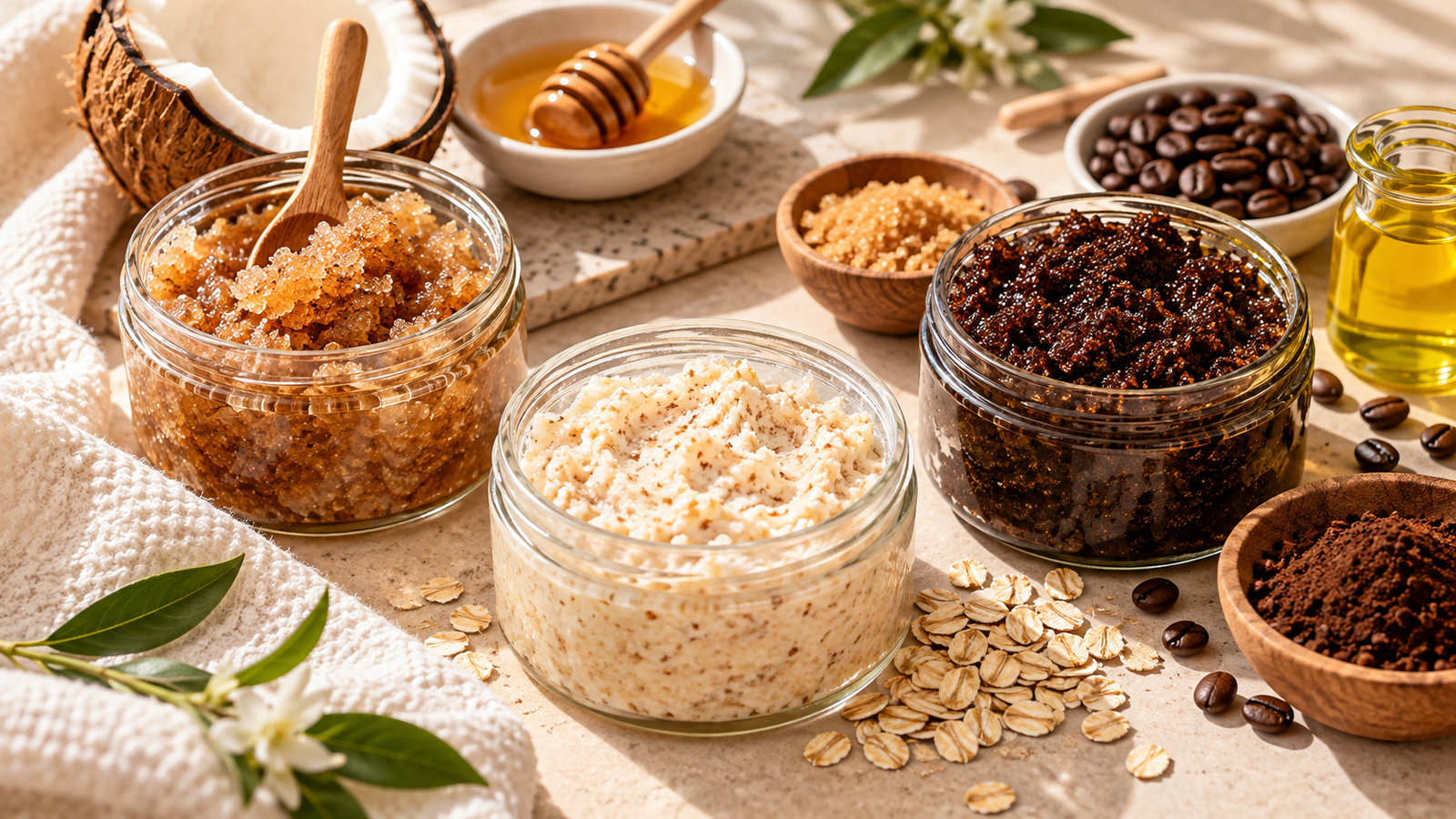

Making your own body scrub can be surprisingly simple. You don’t need a shelf full of specialty ingredients or a complicated DIY skincare routine — a few basic ingredients can create an easy exfoliating scrub in minutes.
But not every scrub needs to be the same combination of sugar and oil.
These 7 DIY body scrub recipes use different textures and ingredient combinations, from fine sugar and creamy oats to coffee and sea salt. You’ll also find guidance on which recipes may work better for dry, easily irritated, or rough-feeling areas, plus how often to exfoliate and how to handle homemade scrubs safely.
Before You Make a DIY Body Scrub
A homemade body scrub is easy to make, but a few basic rules matter.
Always start with clean utensils and containers. If you’re making a scrub that will be stored, make sure the container is completely dry.
When exfoliating, use light pressure. Scrubbing harder doesn’t necessarily give you better results — it can simply leave your skin uncomfortable.
Apply body scrub to damp skin, massage briefly using gentle circular motions, and rinse thoroughly.
Avoid exfoliating skin that is sunburned, irritated, cracked, freshly shaved or waxed, or has open cuts.
And keep these recipes below the neck. Body scrubs can be too abrasive for facial skin.
1. Brown Sugar & Coconut Oil Scrub
Best for: Dry-feeling body skin
Texture: Soft, rich, and moisturizing
Brown sugar has a softer texture than many coarse exfoliating ingredients, while coconut oil gives this simple scrub a rich consistency.
Ingredients
- 1/2 cup brown sugar
- 1/4 cup coconut oil, softened
- 1 teaspoon honey
How to Make It
Place the brown sugar in a clean bowl.
Add the softened coconut oil and mix until the sugar is evenly coated. Stir in the honey.
The finished scrub should be thick enough to scoop without oil pooling at the bottom.
If your coconut oil is solid, soften it slightly first. It should be soft rather than hot.
How to Use It
Apply a small amount to damp arms, legs, or other dry-feeling body areas.
Massage gently for about 20–30 seconds per area, then rinse thoroughly.
How often: Start with once a week.
Storage: If saving leftovers, place them in a clean, completely dry container with a tight lid. Keep water out of the jar and use a clean, dry spoon.
2. Creamy Oat & Yogurt Scrub
Best for: Those looking for a very gentle-feeling scrub
Texture: Soft and creamy
This recipe skips coarse sugar and uses finely ground oats instead, creating a much softer physical texture.
Because it contains yogurt, it is designed as a fresh, single-use recipe.
Ingredients
- 1/3 cup plain oats
- 2 tablespoons plain unsweetened yogurt
- 1 teaspoon honey
How to Make It
Grind the oats into a fine powder using a blender, food processor, or coffee grinder.
Place 2 tablespoons of the ground oats in a small bowl.
Add the yogurt and honey and stir until you have a soft paste.
If necessary, add another teaspoon of ground oats to thicken the mixture.
How to Use It
Spread a small amount over damp body skin.
Massage very lightly using your fingertips, then rinse thoroughly.
If your skin tends to react easily to products or physical exfoliation, test a small area first.
How often: Start with once every 1–2 weeks and see how your skin responds.
Storage: Don’t store this recipe. Make only enough for one use and discard leftovers.
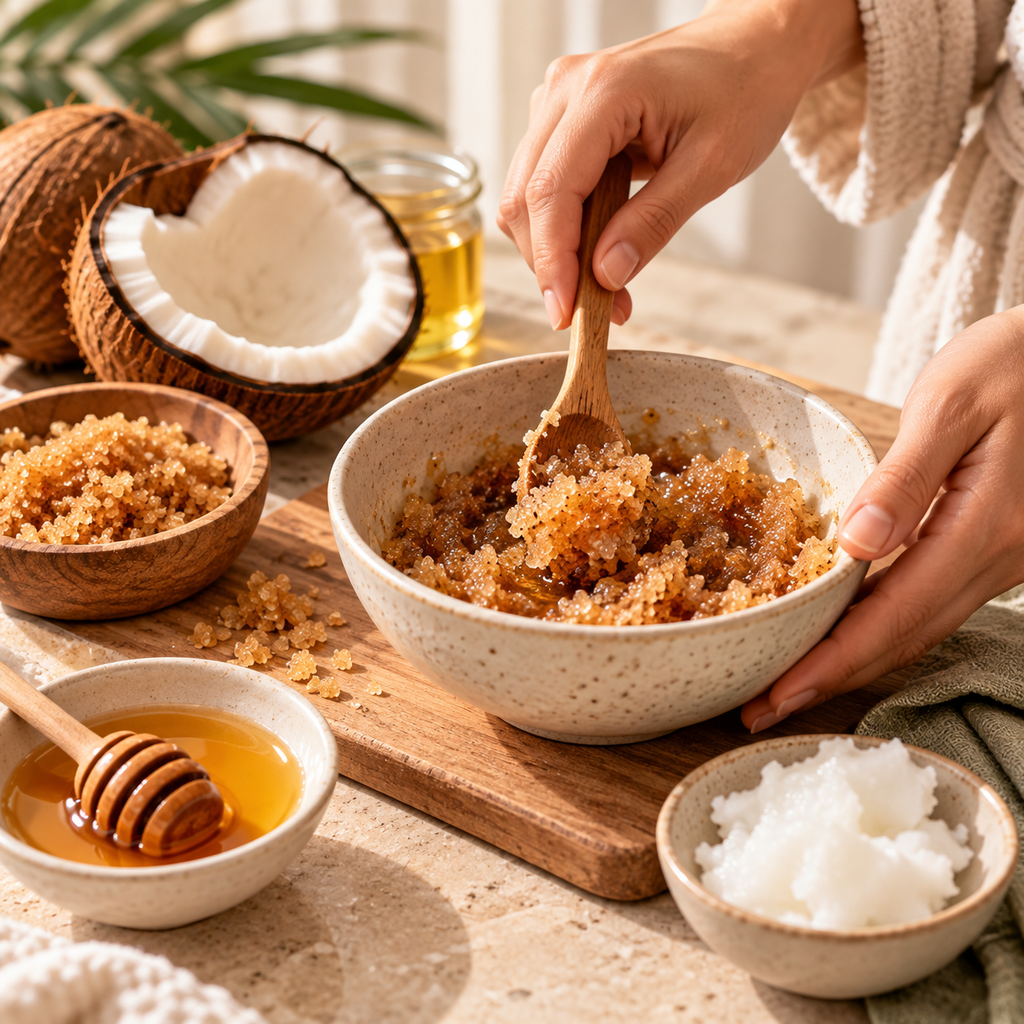
3. Coffee & Olive Oil Scrub
Best for: Rough-feeling legs, elbows, and knees
Texture: Grainier and more substantial
If you prefer a scrub with more noticeable texture, finely ground coffee creates a very different experience from the creamy oatmeal recipe above.
Ingredients
- 1/3 cup finely ground coffee
- 3 tablespoons olive oil
- 1 teaspoon brown sugar, optional
How to Make It
Place the coffee in a bowl.
Gradually stir in the olive oil until the mixture is evenly coated and scoopable.
If you want slightly more texture, add one teaspoon of brown sugar.
How to Use It
Apply to damp body skin and massage gently, concentrating on rough-feeling areas.
Rinse thoroughly.
And yes, coffee scrub can leave the shower looking like you made espresso in it. A quick rinse of the tub afterward is worth it.
How often: About once a week.
Storage: Small batches are best. If you save an oil-only batch, keep it completely dry and tightly sealed. Discard it if you notice any change in smell, appearance, or texture.
4. Fine Sugar & Jojoba Oil Scrub
Best for: Anyone who wants a simple, fragrance-free scrub
Texture: Fine and lightweight
Sometimes the simplest recipe is the most useful.
This version has only two ingredients, making it a good option if you don’t want fragrances, essential oils, or a complicated ingredient list.
Ingredients
- 1/2 cup fine granulated sugar
- 3 tablespoons jojoba oil
How to Make It
Place the sugar in a bowl.
Add the jojoba oil one tablespoon at a time, stirring after each addition.
Stop when the sugar is evenly coated and the mixture holds together without becoming excessively oily.
How to Use It
Massage a small amount over damp body skin using gentle circular motions.
Rinse thoroughly.
How often: Start with once a week.
Storage: Keep in a clean, dry, tightly closed container. Never intentionally introduce water into the jar.
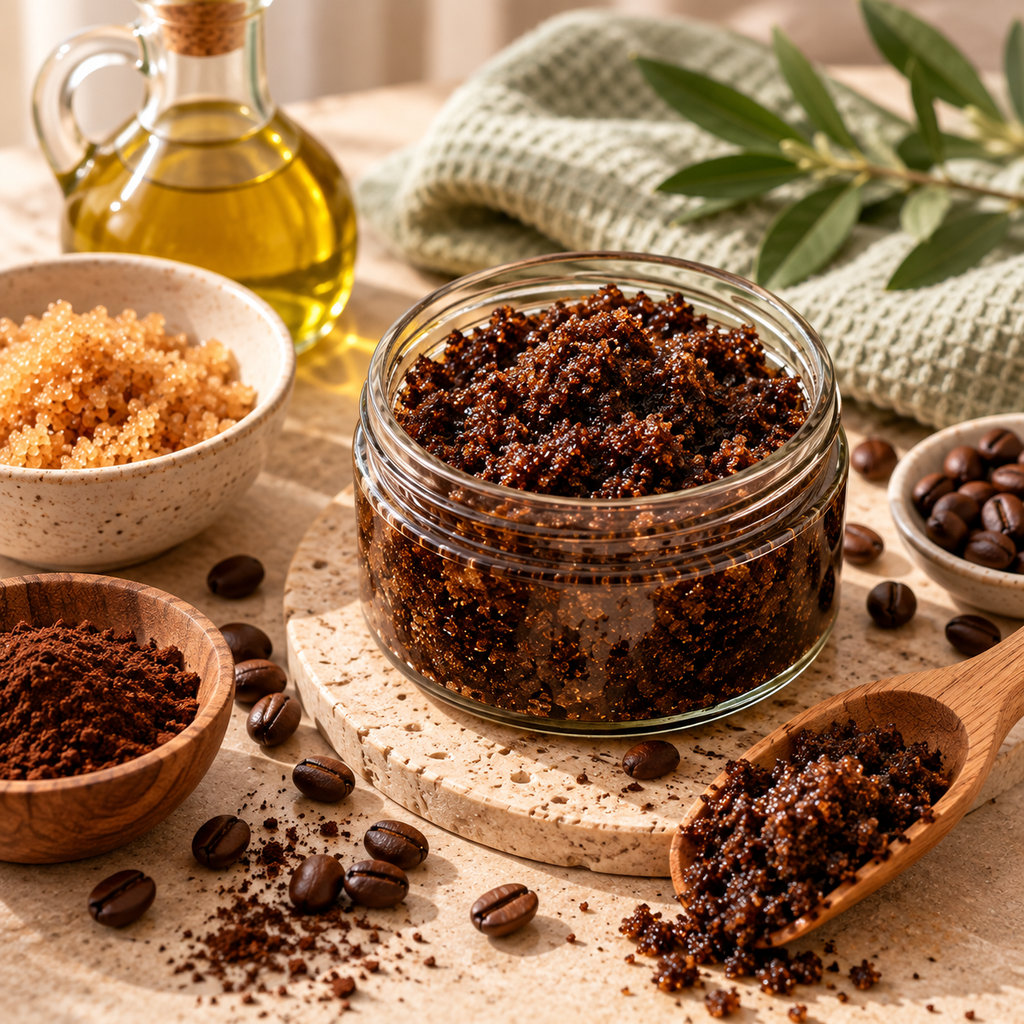
5. Banana & Oat Fresh Body Scrub
Best for: Dry-feeling skin when you want a soft, creamy scrub
Texture: Thick, creamy, and lightly textured
Here’s something completely different from the oil-based scrubs.
Mashed banana creates a creamy base while finely ground oats provide gentle physical texture.
This is another make-it-and-use-it recipe, not one to leave sitting in your bathroom.
Ingredients
- 1/2 small ripe banana
- 2 tablespoons finely ground oats
- 1 teaspoon honey
How to Make It
Mash the banana thoroughly with a fork until as smooth as possible.
Add the finely ground oats and honey.
Mix until you have a thick paste. If the mixture is too loose, add a little more ground oatmeal.
How to Use It
Apply to damp body skin and massage gently.
Rinse thoroughly, making sure no residue remains.
How often: Once a week or less.
Storage: Do not store. Because this recipe contains fresh banana, make only what you need and discard any leftover mixture after use.
6. Brown Sugar & Aloe Gel Scrub
Best for: Anyone who prefers a lighter scrub without a heavy oil base
Texture: Gel-like and lightweight
Not everyone enjoys the oily feeling of traditional homemade body scrubs.
This version pairs fine brown sugar with plain aloe vera gel for a completely different consistency.
Ingredients
- 1/4 cup fine brown sugar
- 2 tablespoons plain aloe vera gel
How to Make It
Combine the brown sugar and aloe gel in a small bowl.
Stir until evenly mixed.
Add a little more aloe gel if necessary to create a spreadable consistency.
Choose a simple aloe gel without added fragrance when possible.
How to Use It
Apply the mixture to damp body skin.
Massage very gently for a short time, then rinse completely.
How often: Start with once every 1–2 weeks.
Storage: Make this recipe fresh for each use rather than storing leftovers.
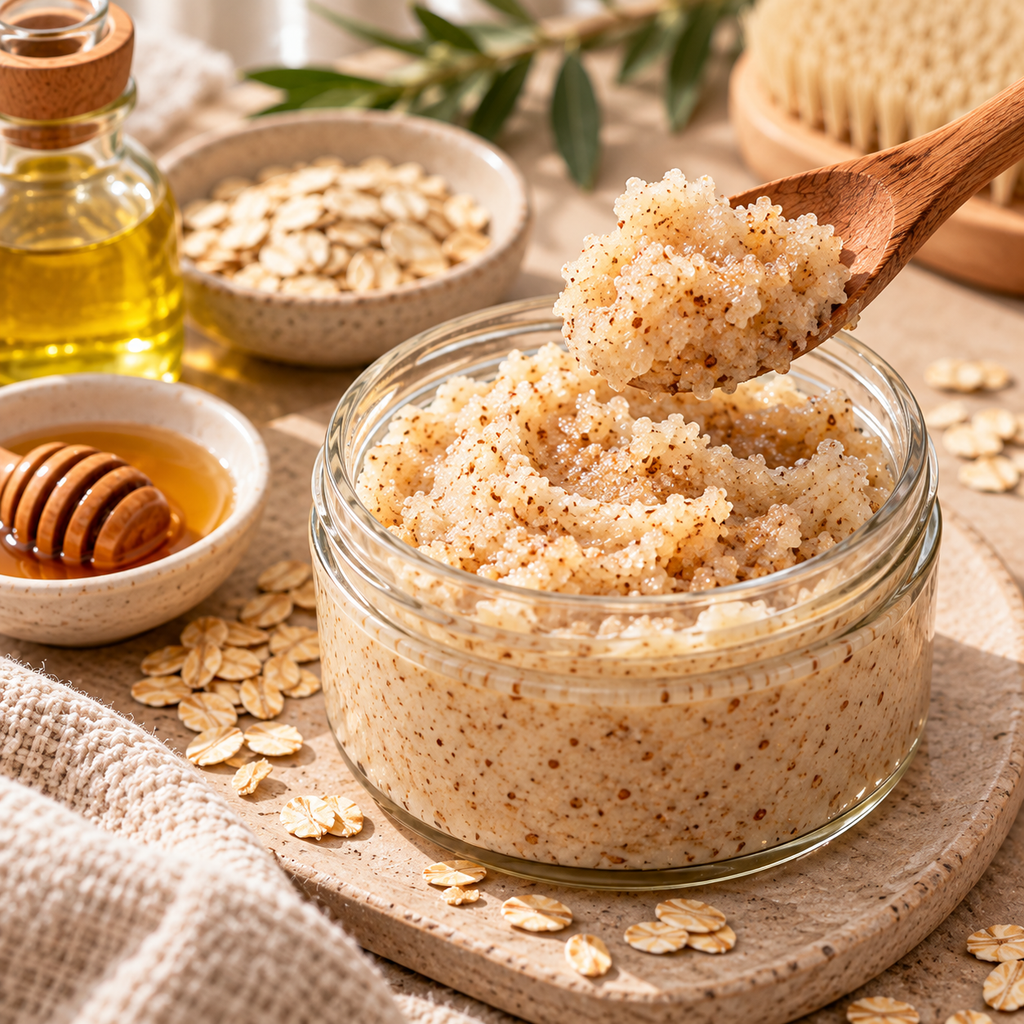
7. Sea Salt & Olive Oil Scrub for Rough Areas
Best for: Rough heels, elbows, and other thicker areas of body skin
Texture: Coarse and intensive
This is the strongest physical scrub on the list, so it has a specific job.
Rather than using it as an all-over body scrub, save it for small areas where the skin feels particularly rough.
Ingredients
- 1/4 cup fine sea salt
- 2 tablespoons olive oil
How to Make It
Combine the sea salt and olive oil in a small bowl.
Mix until the salt is lightly coated.
If your salt crystals are particularly large or sharp, choose a finer salt instead.
How to Use It
Apply a small amount to damp heels, elbows, or similarly rough areas.
Use very light pressure and massage briefly before rinsing thoroughly.
Do not use this recipe on sensitive, freshly shaved, irritated, cracked, or broken skin.
How often: Occasionally as needed rather than automatically every week.
Storage: It’s easiest to make this two-ingredient recipe fresh when needed. If you do keep an oil-and-salt batch, store it completely dry in a tightly closed container.
Which DIY Body Scrub Should You Choose?
Seven recipes doesn’t mean you need seven jars in your bathroom.
The best DIY body scrub is simply the one whose texture and ingredients make sense for the area you want to exfoliate.
If Your Skin Feels Dry
Try:
- Brown Sugar & Coconut Oil Scrub for a rich, traditional scrub
- Banana & Oat Scrub for a creamy fresh option
- Fine Sugar & Jojoba Oil Scrub for something simpler and lighter
If You Want Gentler Exfoliation
Consider:
- Creamy Oat & Yogurt Scrub
- Brown Sugar & Aloe Gel Scrub
Use finely ground ingredients, very little pressure, and less frequent exfoliation.
If your skin is particularly reactive or doesn’t tolerate physical exfoliation well, skipping a scrub altogether may be a better choice.
If You Have Rough-Feeling Areas
Try:
- Coffee & Olive Oil Scrub on areas such as legs, knees, or elbows
- Sea Salt & Olive Oil Scrub only on small, thicker areas such as rough heels or elbows
The salt scrub is intentionally the strongest option in this collection and isn’t intended for delicate areas.
How Often Should You Use a Body Scrub?
You don’t need to exfoliate every day.
For many people, once a week is a reasonable starting point for a gentle body scrub.
If your skin tends to be easily irritated or you’re using a stronger physical exfoliant, less frequently may be more appropriate.
Your skin’s response matters more than following an arbitrary schedule.
Reduce or stop exfoliating if your skin becomes:
- Red
- Tender
- Itchy
- Uncomfortably tight
- Irritated
Also avoid exfoliating immediately after shaving or waxing and whenever the skin is sunburned, cracked, irritated, or broken.
The goal is softer-feeling skin — not winning a wrestling match against your epidermis.
How to Store Homemade Body Scrubs
Homemade skincare requires a little more care than grabbing a commercially formulated scrub from the shelf.
Commercial products are formulated with specific preservation systems. Your kitchen experiment probably isn’t.
That’s why small batches are the smartest approach.
For Oil-Based Scrubs
If a recipe contains only dry ingredients and oils:
- Start with a clean, completely dry container.
- Close the lid tightly after each use.
- Keep the jar away from shower spray and standing water.
- Use a clean, dry spoon rather than wet fingers.
- Store away from excessive heat and direct sunlight.
- Make small quantities rather than preparing a huge batch.
- Discard the mixture if its smell, appearance, or texture changes.
For Recipes With Fresh or Water-Based Ingredients
Recipes containing ingredients such as:
- Yogurt
- Banana
- Aloe gel
are best treated as fresh-use recipes.
Prepare only what you need, use it immediately, and discard leftovers rather than keeping them in the bathroom.
When in doubt, making a fresh two-minute batch is much better than trying to turn homemade skincare into a chemistry experiment.
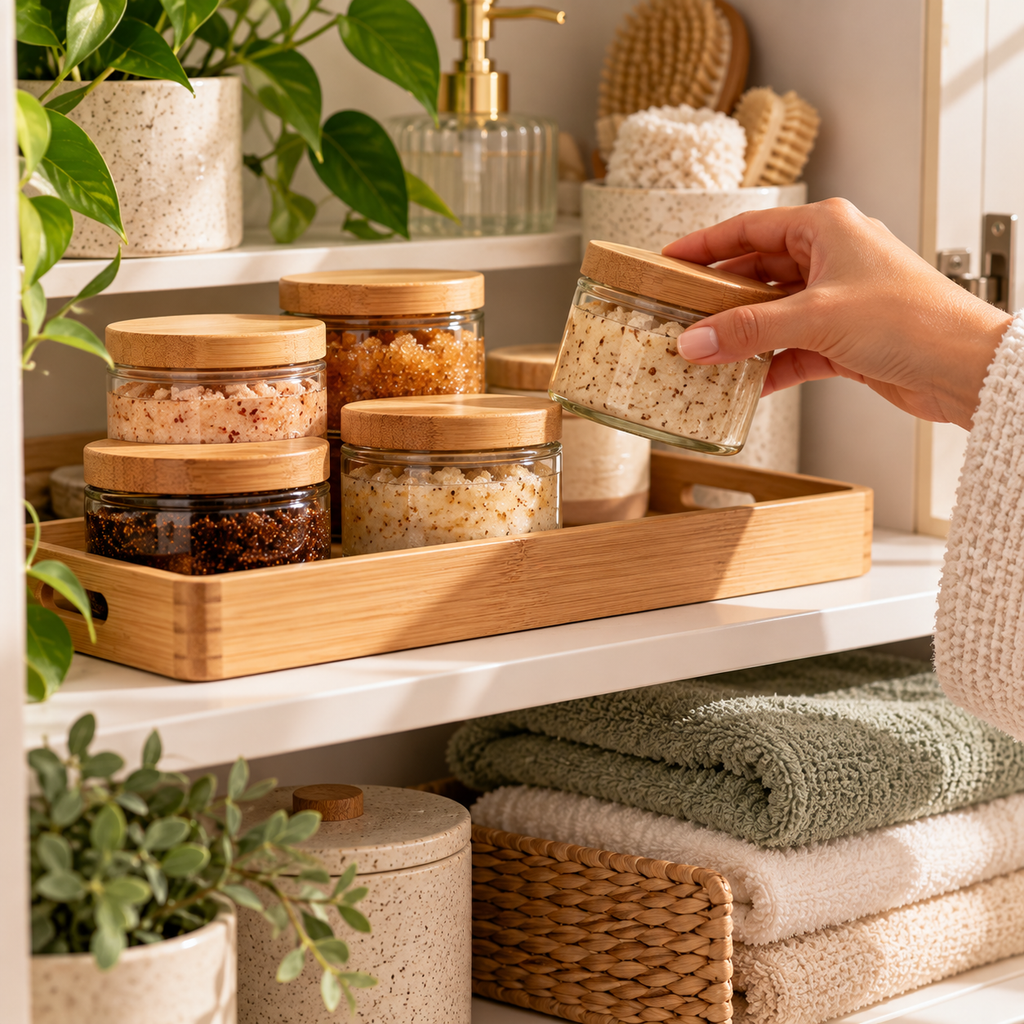
7 Body Scrubs at a Glance
| Recipe | Texture | Best For | Storage |
|---|---|---|---|
| Brown Sugar + Coconut Oil | Soft & rich | Dry-feeling skin | Small dry batch |
| Oat + Yogurt | Creamy & very gentle | Gentler exfoliation | Use immediately |
| Coffee + Olive Oil | Grainy | Rough-feeling areas | Small dry batch |
| Sugar + Jojoba Oil | Fine & lightweight | Simple everyday option | Small dry batch |
| Banana + Oat | Creamy | Dry-feeling skin | Use immediately |
| Brown Sugar + Aloe | Light gel texture | Lighter exfoliation | Use immediately |
| Sea Salt + Olive Oil | Coarse | Heels & rough elbows | Fresh or small dry batch |
Body Scrub Tips That Actually Matter
Before you start mixing ingredients, remember these simple rules.
1. Finer Isn’t a Bad Thing
You don’t need enormous crystals to exfoliate your skin.
Fine sugar or finely ground oats can provide physical texture without turning your scrub into sandpaper.
2. Don’t Scrub Hard
Let the texture do the work.
Use light circular motions rather than pressing aggressively against your skin.
3. Body Means Body
These DIY body scrub recipes aren’t intended for facial exfoliation.
Keep them below the neck.
4. Be Careful in the Shower
Oil-based scrubs can make shower and bathtub surfaces slippery.
Rinse the floor afterward and watch your footing.
5. You Don’t Need Essential Oils
You may notice that none of these recipes requires essential oils.
That’s intentional.
A body scrub doesn’t need to smell like a lavender field, peppermint candy, or tropical vacation to do its job. Keeping the recipes fragrance-free also makes them simpler.
6. Patch-Test When It Makes Sense
If you’re using an ingredient you haven’t applied to your skin before, try a small amount on a limited area first.
Stop using the mixture if you experience burning, persistent redness, itching, swelling, or other irritation.
Make the Recipe That Fits Your Skin
The best part about these DIY body scrub recipes is that you don’t need to commit to a giant batch.
Want something rich? Try brown sugar and coconut oil.
Prefer a creamy texture? Make the banana and oat scrub.
Don’t like oily scrubs? Try brown sugar and aloe.
Need something specifically for rough heels? That’s where the sea salt recipe makes more sense.
Pick one recipe based on what your skin actually needs, make a small batch, and keep your technique gentle.
Homemade body care doesn’t need to be complicated to feel like a little upgrade to your routine.
This article is for general informational purposes only and is not medical advice. Skin can respond differently to physical exfoliation and individual ingredients. Discontinue use if irritation occurs and seek professional medical advice for persistent or concerning skin problems.